Palermo is a city of contradictions and contrasts: a blaze of baroque behind working-class neighbourhoods, the bedlam of the markets and Byzantine gold, the chaos of Saturday night at the Vucciria and the quietness of Sunday morning, and again, pani câ meusa and raw prawns. If you are ready to immerse yourself in this riot of contradictions, here are the must-see attractions in Palermo.
Looking for a hotel in Palermo? We have selected the best offers on Booking.com for you
1 - Politeama Theatre

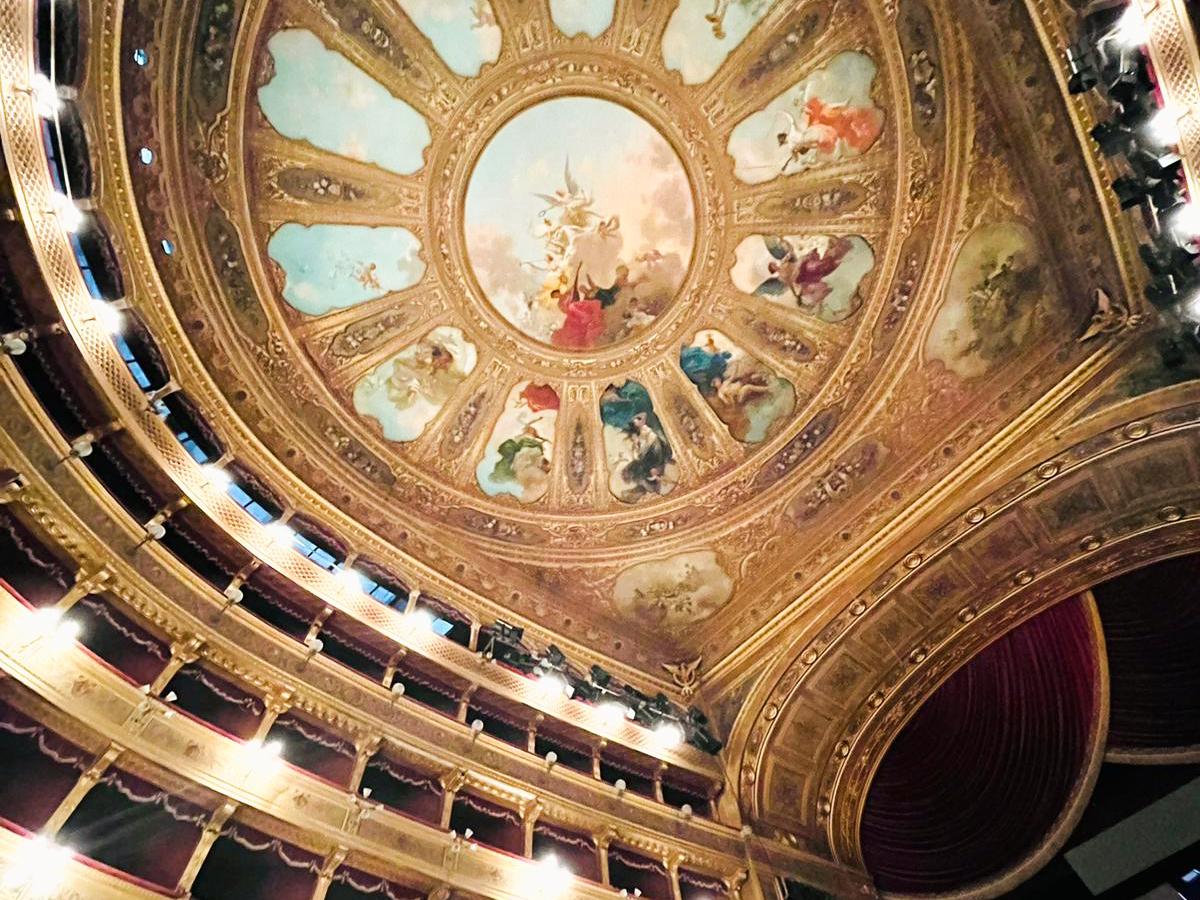
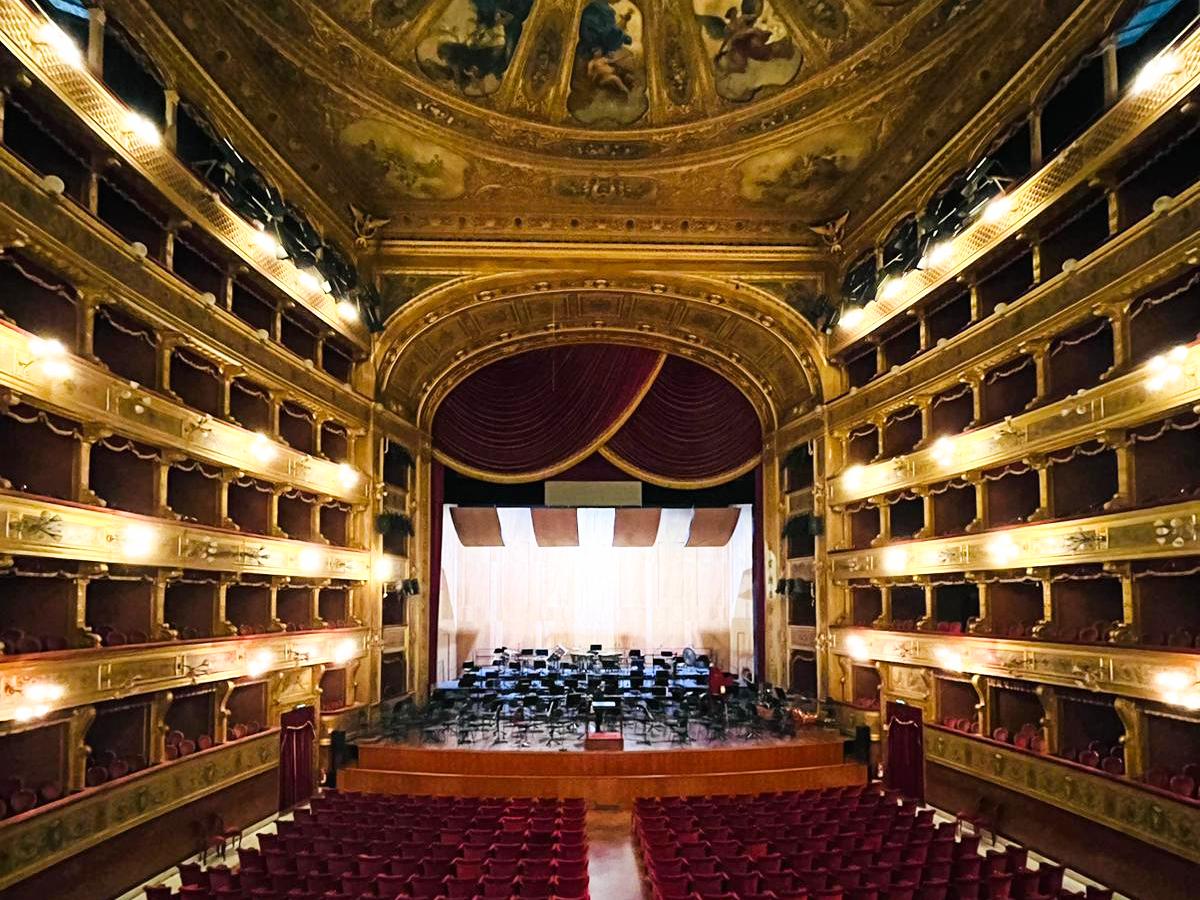
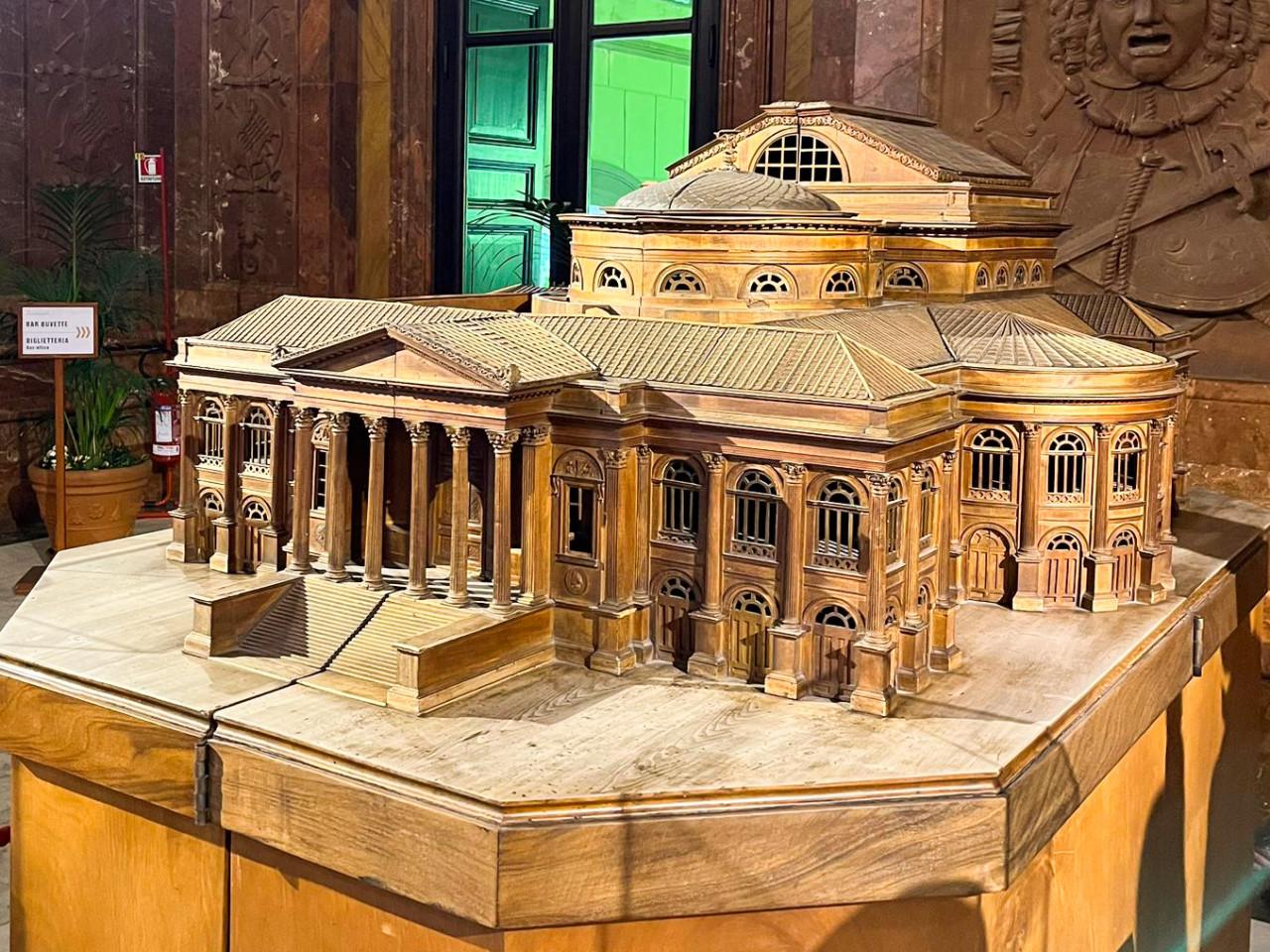 Let's start with a theatre: the Politeama. Inaugurated in 1874, when it was still incomplete, it was started by Giuseppe Damiami Almeyda to be the'Theatre of the People'. Its characteristic horseshoe-shaped hall had a capacity of 5,000 spectators, a double row of boxes and a gallery divided into two tiers. The most striking part of the whole Politeama, however, is definitely the exterior. To look at it, it might remind one a little of the Pantheon, with its circular shape. Surmounting the arch of its monumental entrance you can also see a bronze quadriga with the god Apollo.
Just think that initially the theatre was actually outdoors, without a roof, a bit like the Arena in Verona for instance. The metal roof was only added three years after the inauguration.
Today it is the seat of the Sicilian Symphony Orchestra, and also hosts beautiful concerts of international artists, both classical and modern.
Practical info: directions, times and prices
How to get there: Piazza Ruggero Settimo 15. From the Central Station take the bus (104, 101 or 108) to 'Politeama' - Get directions
Hours: Tuesday to Sunday: 9:30 am - 2:00 pm
Ticket price: Full €5.00. Reduced €3.00
2 - Antonio Salinas Regional Archaeological Museum
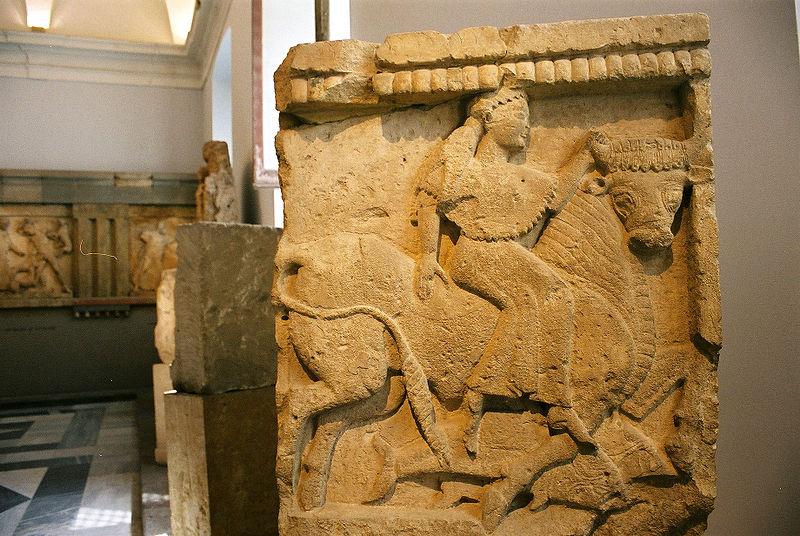 This isone of the most important museums in Palermo and in the whole of Sicily. Located inside the old College of the Fathers of the Congregation of San Filippo Neri, it houses a vast collection of artefacts closely related to the history of Sicily, from prehistory to the Middle Ages. You can see artefacts dating back to the period when the Phoenicians were in control of Palermo and the surrounding area, others of Greek or Roman origin. However, there is also evidence of other cultures, as demonstrated by Egyptian and Etruscan artefacts.
This is where the street food tour starts: right in front of the museum, in Piazza Olivella, the walking tour between street food and history starts, which in about 3 hours will take you around Palermo's must-sees between stops for tastings of the cornerstones of Palermo's street food!
Practical info: directions, times and prices
How to get there: Via Bara dell' Olivella 24. From the Central Station take bus 101 to the 'Poste' stop - Get directions
Hours: Tue-Sat: 9am-6pm. Sunday 9:00am-1:30pm
Ticket price: Full €4.00. Reduced €2.00
3 - Massimo Theatre
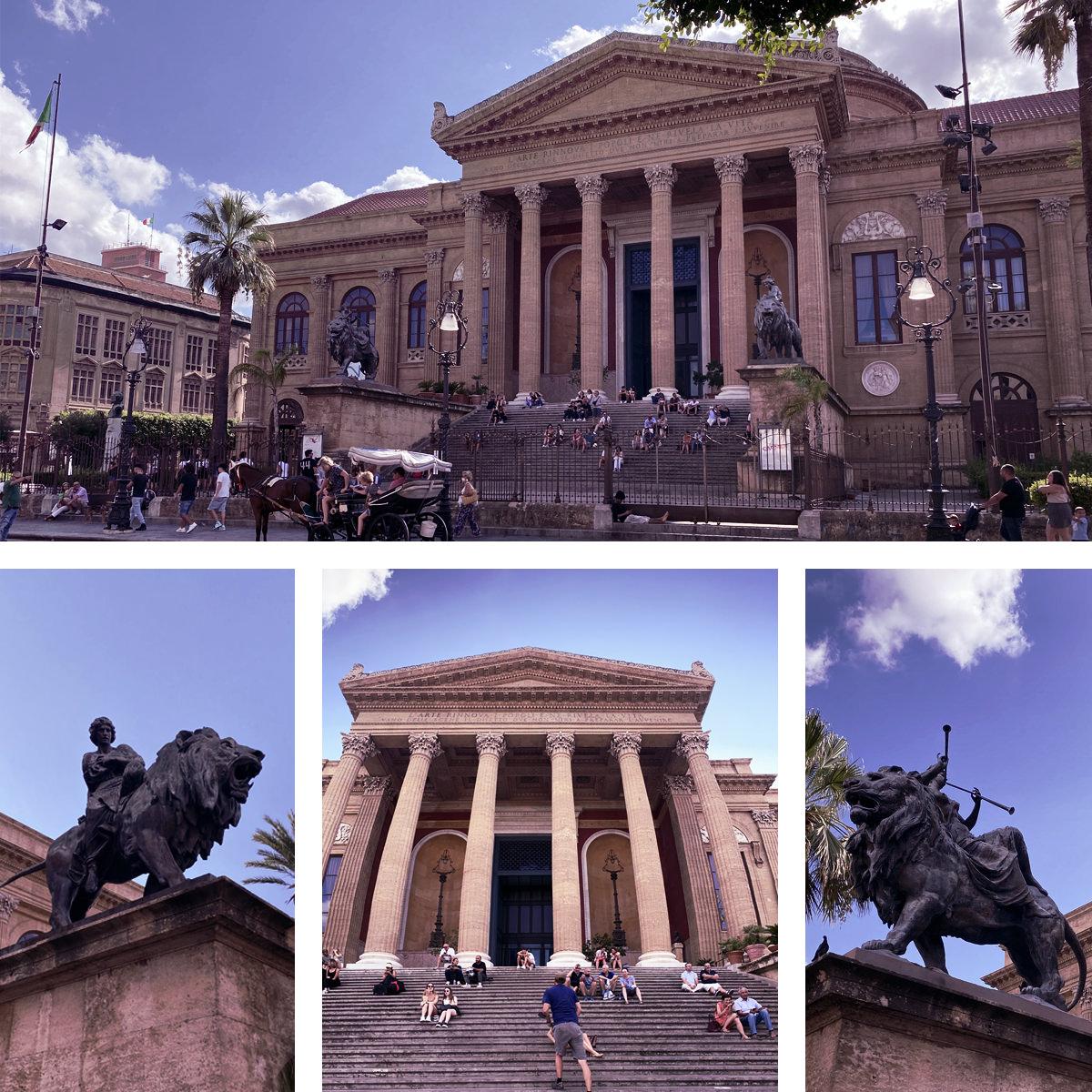 One of Palermo's main theatres. The importance of this theatre, however, is not only recognised at city level, but also nationally and internationally: the Teatro Massimo is in fact also the largest opera house in Italy and one of the most important in Europe. To be more precise, only the Paris Opera and the Vienna State Opera precede it. Because of its importance, we recommend seeing it on a guided tour in Italian.
Built in the second half of the 19th century, it is rich in fine decorations, gold lacquer work, mirrors and anything else you can think of when you think of glitz. What is striking about this theatre, apart from the exterior that is reminiscent of a Greek temple (it is in fact built in the neoclassical style) is also the acoustics inside, which are nothing short of perfect.
Very beautiful are the sculptures on either side of the imposing entrance staircase, with two lions supporting allegories of tragedy and opera.
The inscription on the pediment, the theatre's motto, reads:'Art renews people and reveals their life. Vain of scenes the delight where it does not aim to prepare the future'. The author is anonymous and unknown.
Also very nice is the café inside, open to the public for elegant aperitifs in the centre.
In the evening, the theatre is lit up and the square in front is filled with street performers.
Hotels and B&Bs in the surrounding area: B&B Teatro, via Bara all'Olivella 51, Tel 3333225289 / 3339110239(see details)
Practical info: directions, times and prices
How to get there: Piazza Verdi. From Central Station take bus 101 for 6 stops. Then walk along via Bara all'Olivella for about 500 m - Get directions
Hours: Mon-Fri: 9:30am-6pm
Ticket price: Full price: €8.00. Reduced: €6.00
Watch out for the nun's step: two churches were demolished to build the theatre, and legend has it that a nun from the demolished convent still roams the halls of the theatre. Some swear they have seen a shadow in the windows. According to the legend, moreover, those who do not believe the story, on entering the theatre stumble over a specific step in the entrance, known as the 'nun's step'.
To discover this and other stories, we recommend visiting the theatre on a half-hour guided tour in Italian.
4 - Complex of Piazza Pretoria, Quattro Canti and Piazza Bellini
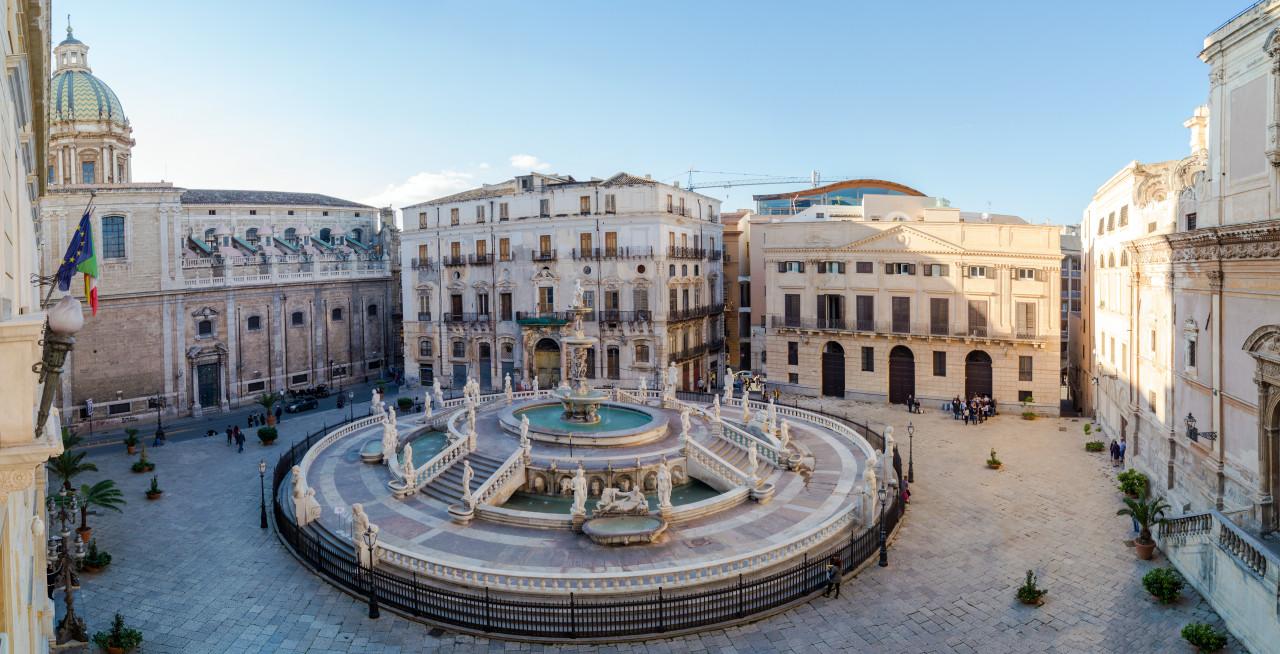
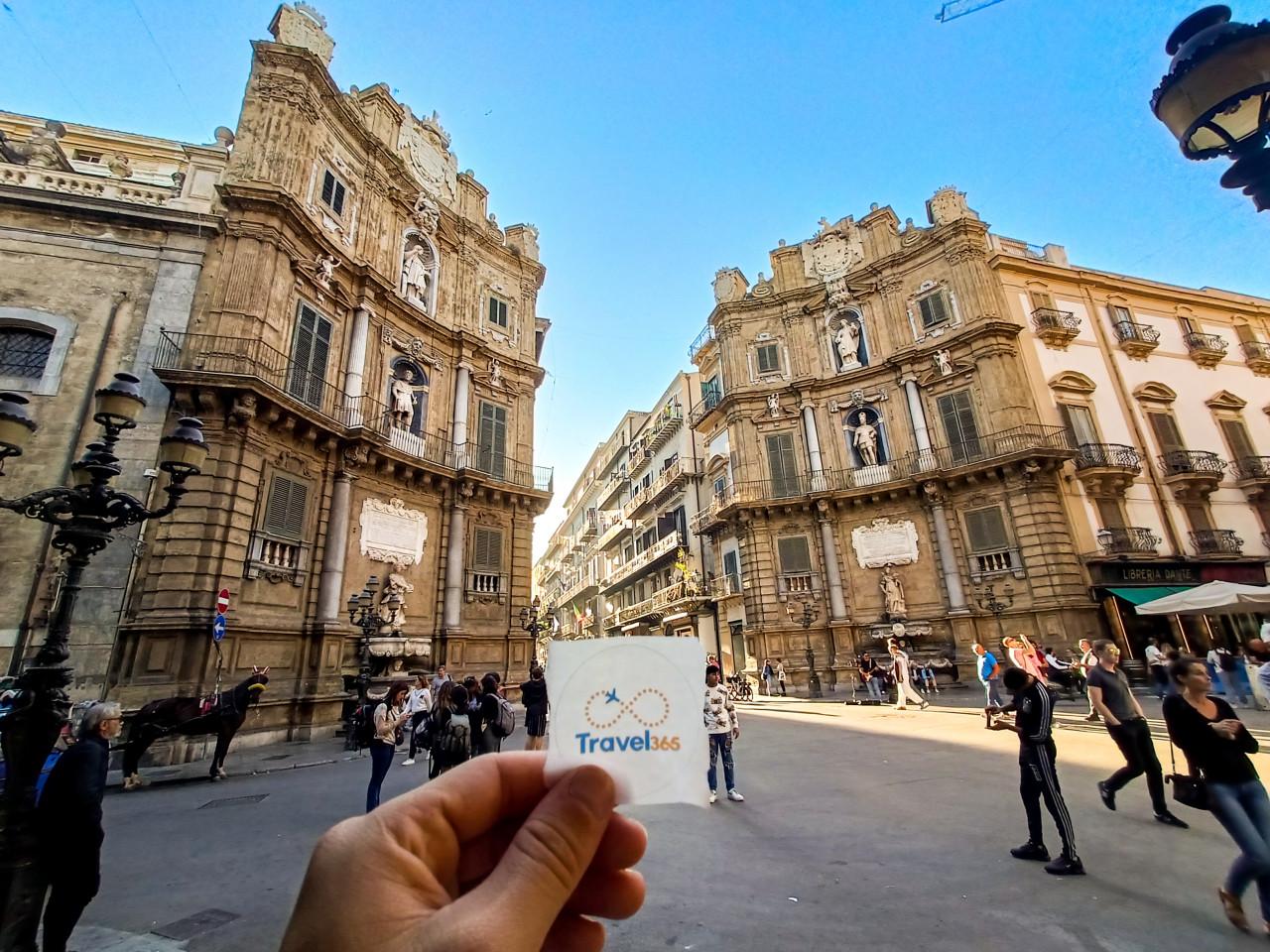
 At the crossroads of Piazza Vigliena, known as'Quattro Canti', there is an extraordinary concentration of churches and historical monuments. Starting from Piazza Vigliena itself, the'Quattro Canti' to be precise: this crossroads is marked, in its 4 corners, by 3 orders of Baroque statues representing, from bottom to top, the 4 seasons of the year, the 3 Spanish viceroys + Charles V and, finally, the 4 patron saints of Palermo before the advent of Santa Rosalia.
We continue to Piazza Pretoria, known as the'Piazza della Vergogna' (Square ofShame) because of the fountain adorned with nude statues right in front of the monastery of the cloistered nuns of Santa Caterina.
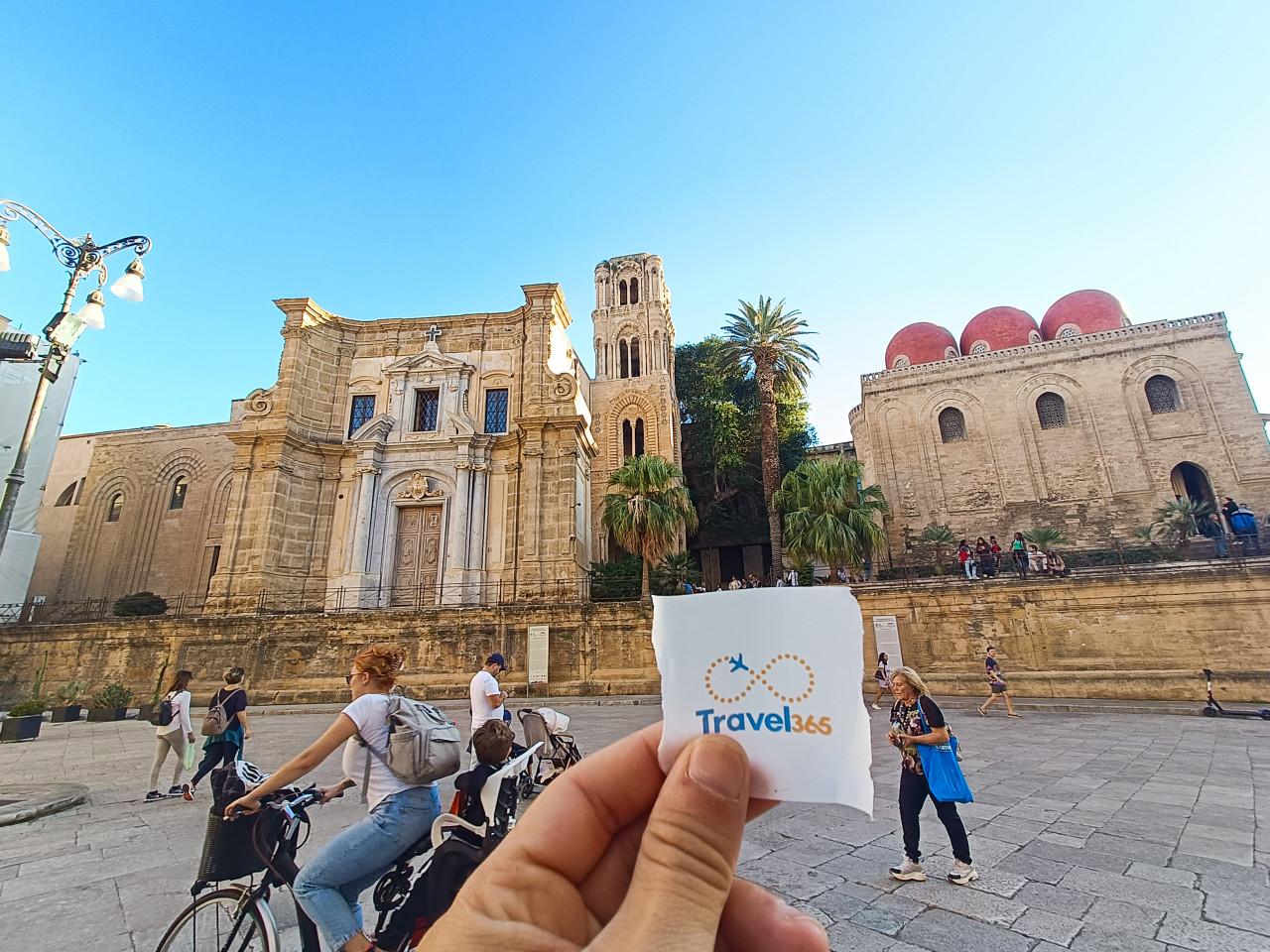
In the adjacent Piazza Bellini are the church of San Cataldo, a typical example of Arab-Norman architecture, with its square shape and red dome at the top, and the church of Santa Maria dell'Ammiraglio, known as'La Martorana'. Very small and rich in Byzantine mosaics, it takes its name from the story that the famous martorana fruit was born here, the work of the Benedictine nuns of the nearby convent founded by the noblewoman Eloisa Martorana.
Visit the centre with a guide: this square is a stop on a more comprehensive tour that also includes the markets and other monuments in the historical centre. Discover stories and anecdotes together with a local guide on a walking tour in Italian of the markets and monuments in the centre.
Practical info: directions, times and prices
How to get there: Crossroads of Via Vittorio Emanuele and Via Maqueda. From Central Station take bus 101 for 4 stops - Get directions
Timetable: always accessible
Ticket price: free
5 - Cathedral
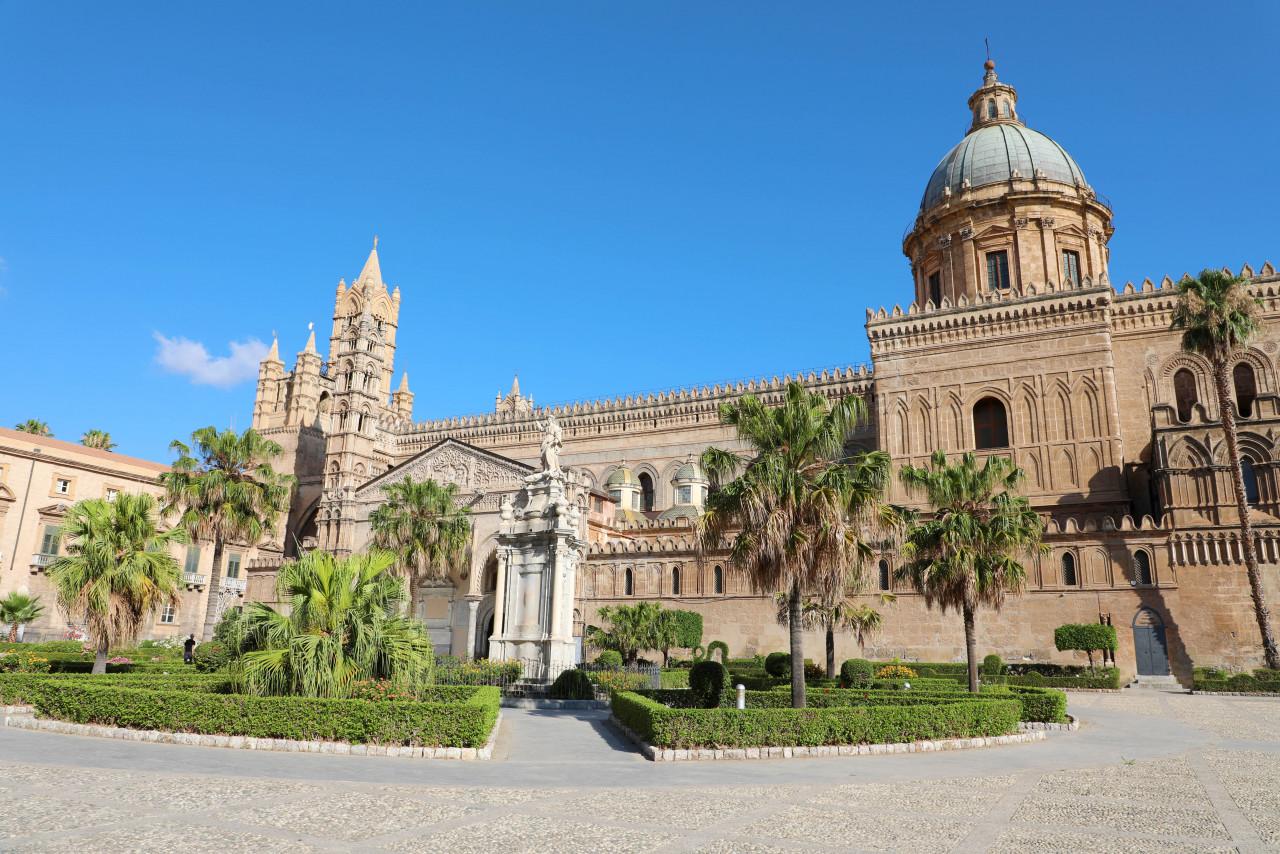 Palermo Cathedral is certainly one of the city's most evocative sights. Its mammoth structure is a mixture of different styles and architecture that testify to the history of this building. Built around 1185 and dedicated to the Holy Virgin Mary of the Assumption, since 2015 it has been part of the Unesco heritage of the Arab-Norman itinerary of Palermo, which also includes Cefalù and Monreale.
Its construction was desired by Archbishop Gualtiero Offamilio, who decided to have it built on top of an already existing Muslim place of worship. The structure of the church was then modified over the centuries, with renovations and additions, such as those in the 14th century that saw the elevation of the four bell towers. Between the 15th and 16th centuries, the southern and northern porticos were built.
The structure of the Cathedral is in the shape of a Latin cross, with three naves divided by pillars with statues of saints that were part of the decoration of Gagini's tribune. Inside you will find the imperial and royal tombs of Henry VI, Frederick II, Empress Constance and Roger. Also in the cathedral is the Treasure Room, where you can admire sacred vestments from the 16th to the 18th century and the golden tiara of Constance of Aragon.
Practical info: directions, times and prices
How to get there: via Vittorio Emanuele. From the central station, take bus 101 for 4 stops, get off at Via Vittorio Emanuele and walk about 800 metres - Get directions
Hours: Mon-Sat: 9:00 a.m. to 5:30 p.m. Sunday: 9:00 a.m. to 1:00 p.m.
Ticket price: free, €2.00 to climb the roofs
Look for details and climb the rooftops in the evening: Palermo Cathedral is full of details and curiosities. Just think that on the first column to the left of the main portico, there is still a sura of the Koran dating back to the Arab period, when it was still a mosque. There are also tours of the cathedral's rooftops in the evenings, a wonderful tour of the hidden corners and amazing views!
6 - Zisa Castle
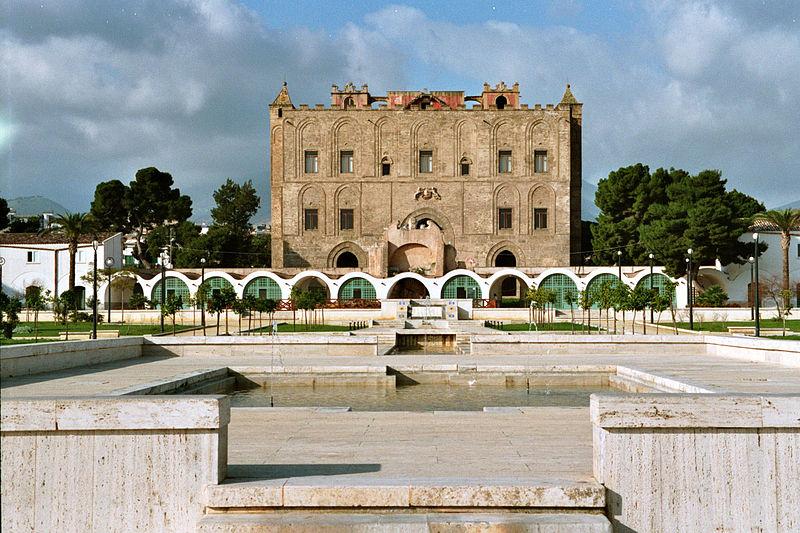 To visit the Zisa Castle, you will have to move a bit from the historical centre, but it is worth the candle. This splendid palace was built in 1165 as the summer residence of the royal family. What is without a doubt astonishing is the exterior of the palace, characterised by a large park with pools running the length of it, gardens and pergolas.
The interior, on the other hand, today remains bare of the beauty that had characterised it over the centuries. However, the Arab architecture inside the rooms remains, with an impressive symmetrical and stereometric study to ensure the desired ventilation, coolness and humidity in the various rooms. The Hall of the Fountain, the columns and the frescoes on the ground floor are very beautiful and seem to conceal a legend. It is up to you to discover it.
Since 1991, the Zisa has housed the Museum of Islamic Art.
Practical info: directions, opening hours and prices
How to get there: From Piazza Castelnuovo (opposite the Politeama) take bus 124, 108 0 106 for 8 stops - Get directions
Hours: Mon-Sat: 9:00- 18:30. Sundays and public holidays 9:00 a.m. - 1:30 p.m.
Ticket price: Full €6.00. Reduced €3.00
Find and count the Zisa Devils: in the entrance arch separating the vestibule from the Sala della Fontana is a depiction of Olympian deities (Jupiter, Neptune, Pluto, ...). It seems that these are not actually gods, but devils! According to legend, the devils guard a treasure: it seems that only those who manage to count them correctly twice will find the treasure, because every time you try, the counts don't add up because they get mixed up!
7 - Capuchin Catacombs
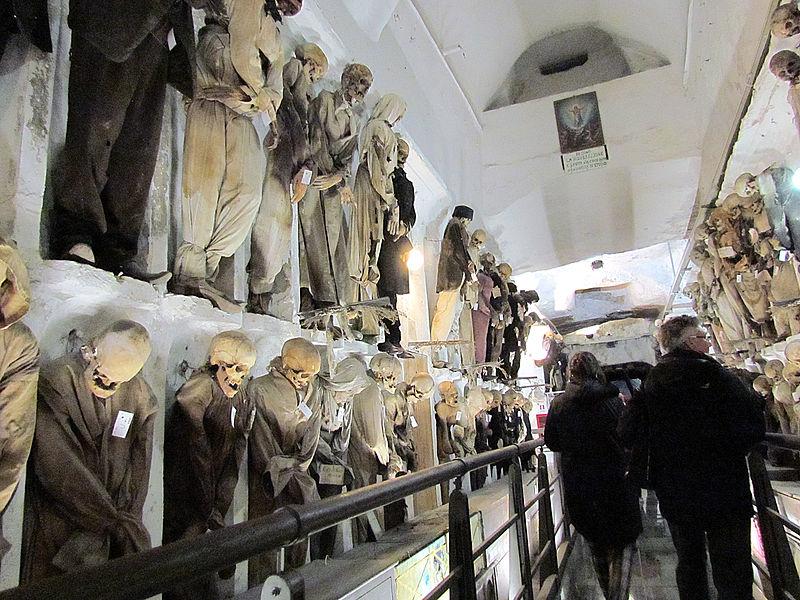 Photo by Gmihail.
 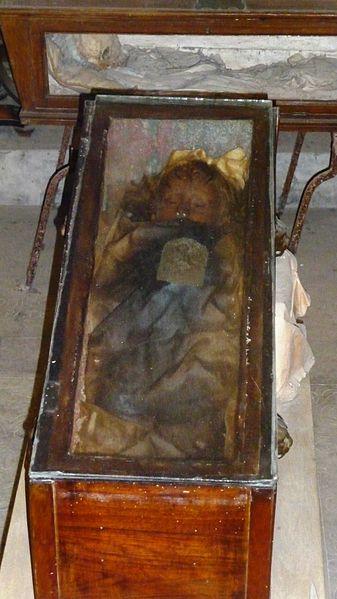 Photo by Habanero666. A somewhat macabre but decidedly special place:'The place where the living meet the dead', as we read on the site dedicated to the cemetery of the Convent of the Capuchin Friars in Palermo. And this is no trivial figure of speech: the phrase fully clarifies the reason why the friars began mummifying corpses, that is, to give relatives the possibility of continuing to meet their loved ones, just as if the latter were alive. Hence the idea of improving the processes of natural mummification and extending this practice to the Palermo bourgeoisie. Therefore, from the 17th to the 19th century, thousands of people, mostly notables, decided to entrust the bodies of their dead to the Capuchins in exchange for rich donations. This practice ended in the early 20th century, with the notable exception of Rosalia Lombardo, a two-year-old girl who was mummified (but artificially) at the behest of her father and is still housed in the catacombs.
Thecomplex is divided into 'corridors': the Capuchin Friars' corridor, the oldest and most central core; the prelates' corridor; the women's corridor, dressed in embroidered robes, while the virgin women are in the Chapel of the Crucifix; the men's corridor; the children's chapel and the family corridor, where entire families have been reunited; the professionals' corridor, with the mummified bodies of doctors, painters, lawyers, officers and soldiers, including that of the painter Velasquez.
Becareful not to take photos, especially with flash!
Practical info: directions, opening hours and prices
How to get there: Piazza Cappuccini 1. From the station, almost 3 km walk via Via Serradifalco - Get directions
Hours: open every day of the year (including holidays) from 9.00 am to 1.00 pm and 3.00 pm to 6.00 pm. Closed on Sunday afternoons
Ticket price: €3.00
The littlegirl who seems to be sleeping: the undisputed protagonist is little Rosalia Lombardo, placed in a glass urn. Her face is perfectly intact, plump, fresh. It seems that conventional embalming methods were not used for little Rosalia: according to some, the body was treated with chemicals, but the truth is that she died with the doctor Solafia, who took care of her preservation.
8 - Norman Palace and Palatine Chapel
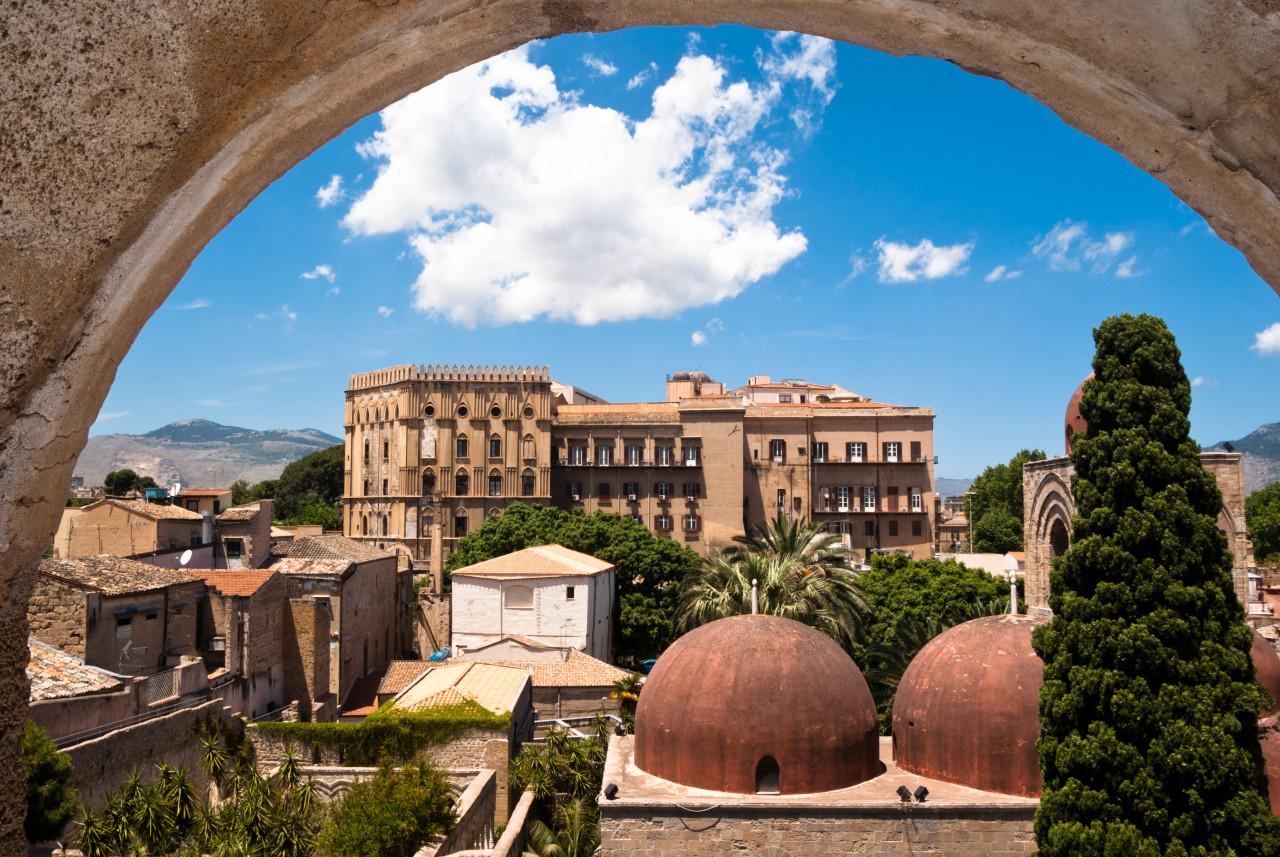
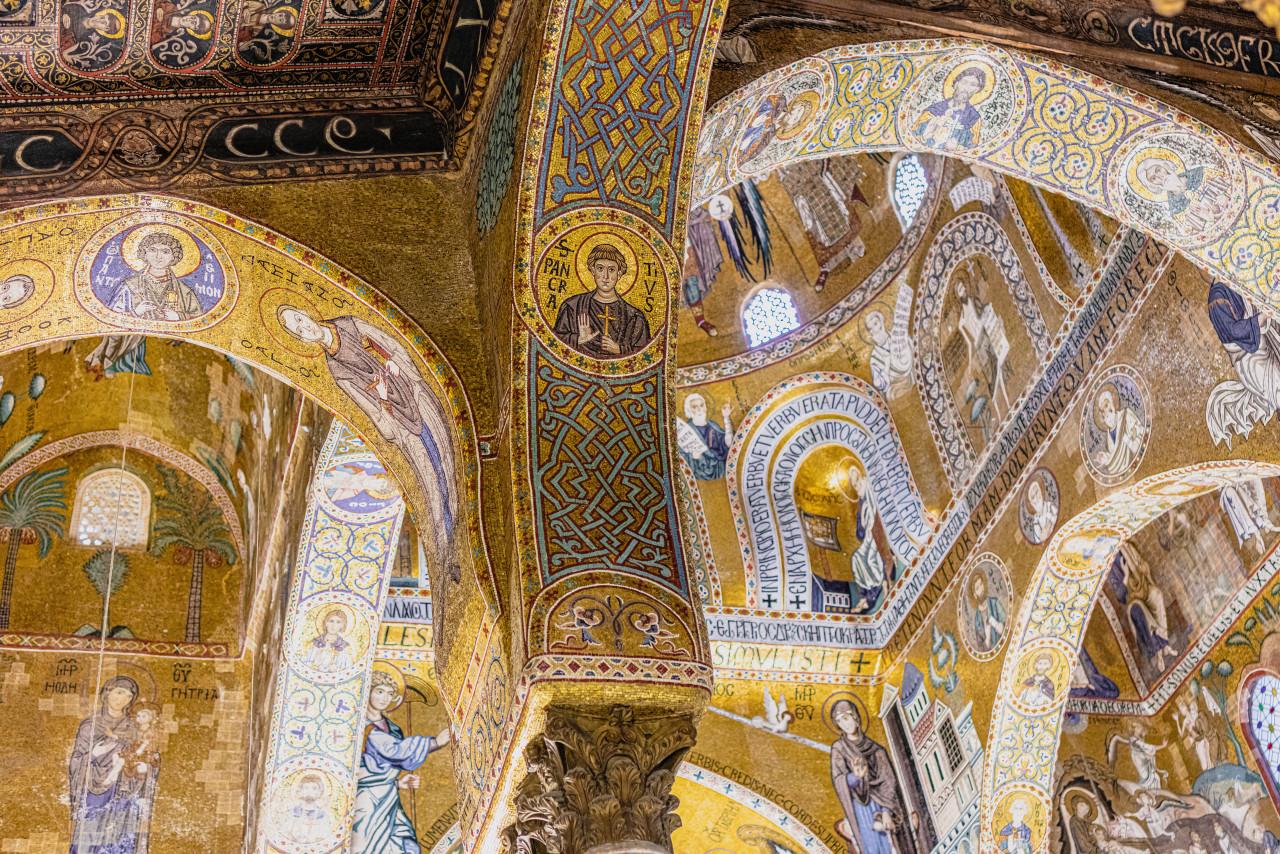 The Palace of the Normans, otherwise known as the Royal Palace, was a decidedly sumptuous palace, rich in frescoes and mosaics. Standing out among the various 'flats' is undoubtedly the Palatine Chapel, originally the church of the royal family. Completely decorated with Byzantine mosaics and wooden stalactites, it is undoubtedly one of the most beautiful places in all of Sicily.
However, the Palace was not only the home of the royal family, but also the residence of the Spanish Viceroys, who chose it as their 'home' during the 16th century. During this period, the Norman towers were demolished (except for the Pisan tower) and two inner courtyards were added, as well as other state rooms. Prominent among these is the Hall of Hercules, named after some frescoes depicting the 12 Labours of Hercules, painted by Velasquez. Today, part of the Palace is also the seat of the Sicilian Regional Assembly.
SEE ALSO: Visit Palazzo dei Normanni and Cappella Palatina in Palermo: times, prices and tips
Practical info: directions, times and prices
Directions: Piazza Indipendenza 1. From the Central Station take bus 109 to Indipendenza - Get directions
Hours: Mon-Sat: 8:15am-5:40pm. Sundays and public holidays from 8:15am to 1pm
Ticket price: full price €14.50, concessions €12.50
The Paradise... of the Koran! Yes, the ceiling of the Palatine Chapel, a Christian Catholic church, has no less than 750 paintings depicting the Koranic paradise! Dancers, peacocks, monsters, scenes of life in the Islamic court, symbolism of the pleasures of the senses and the spirit. An incredible demonstration of religious and cultural integration.
9 - Ballarò Historical Market
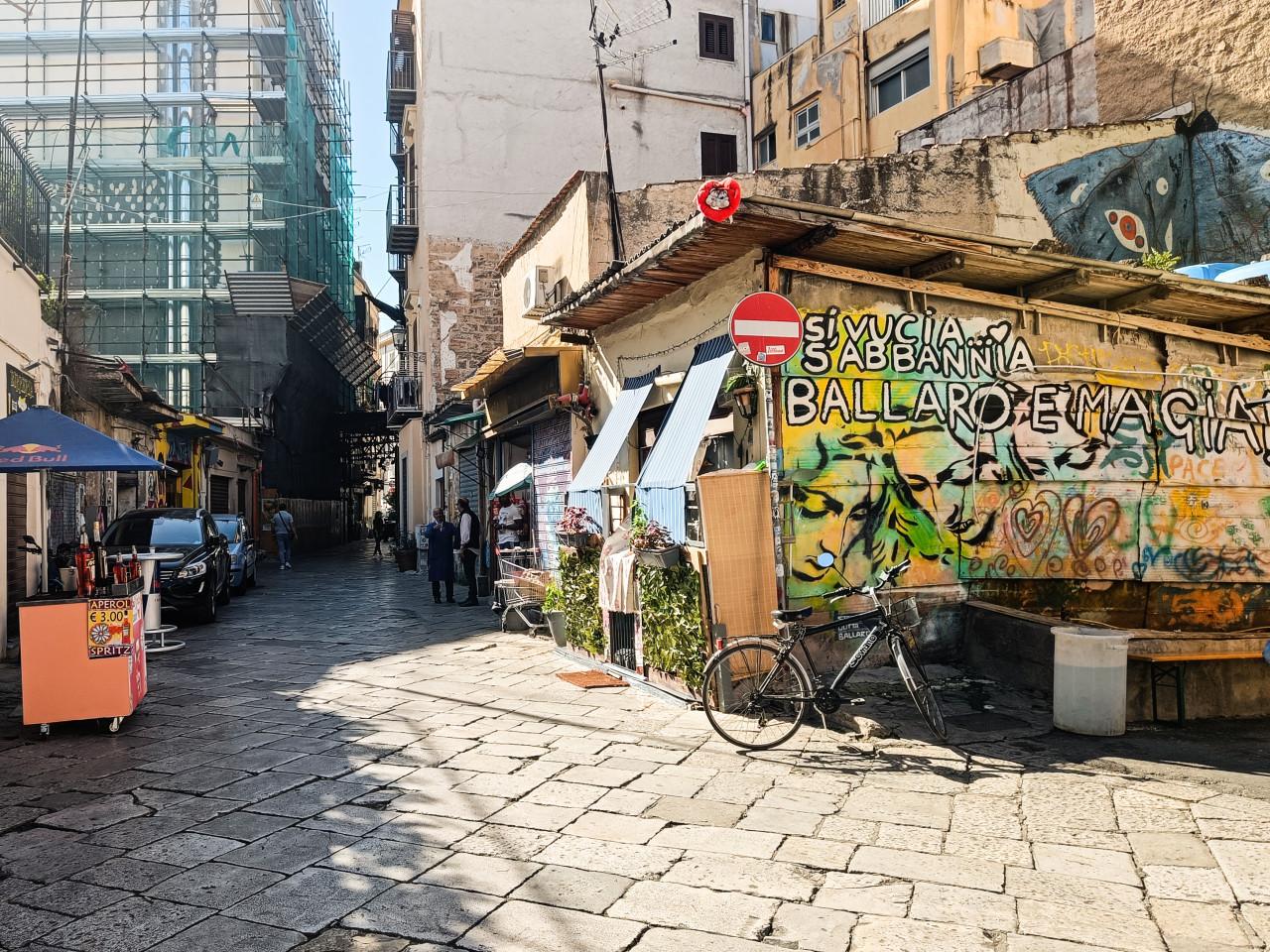
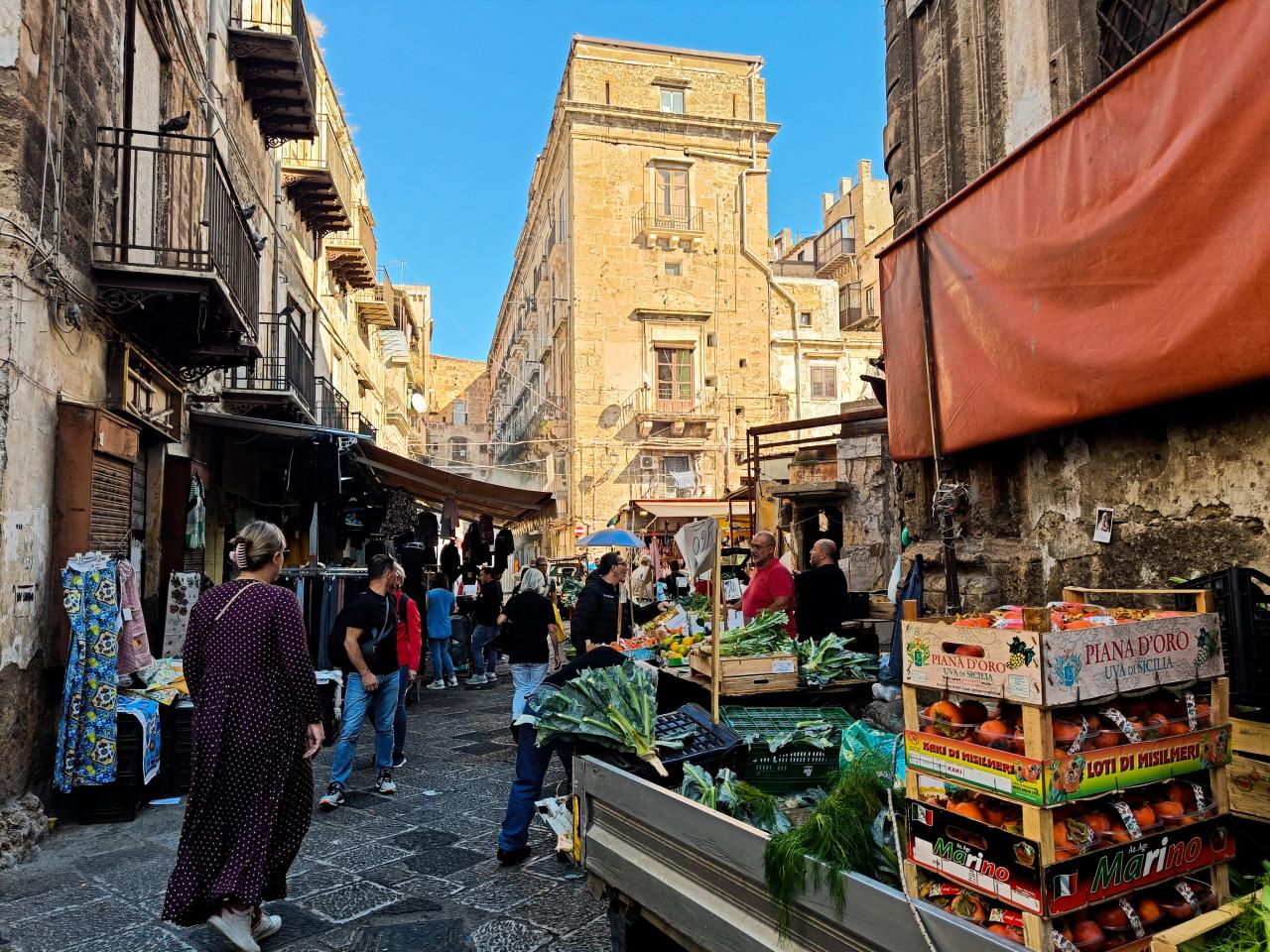
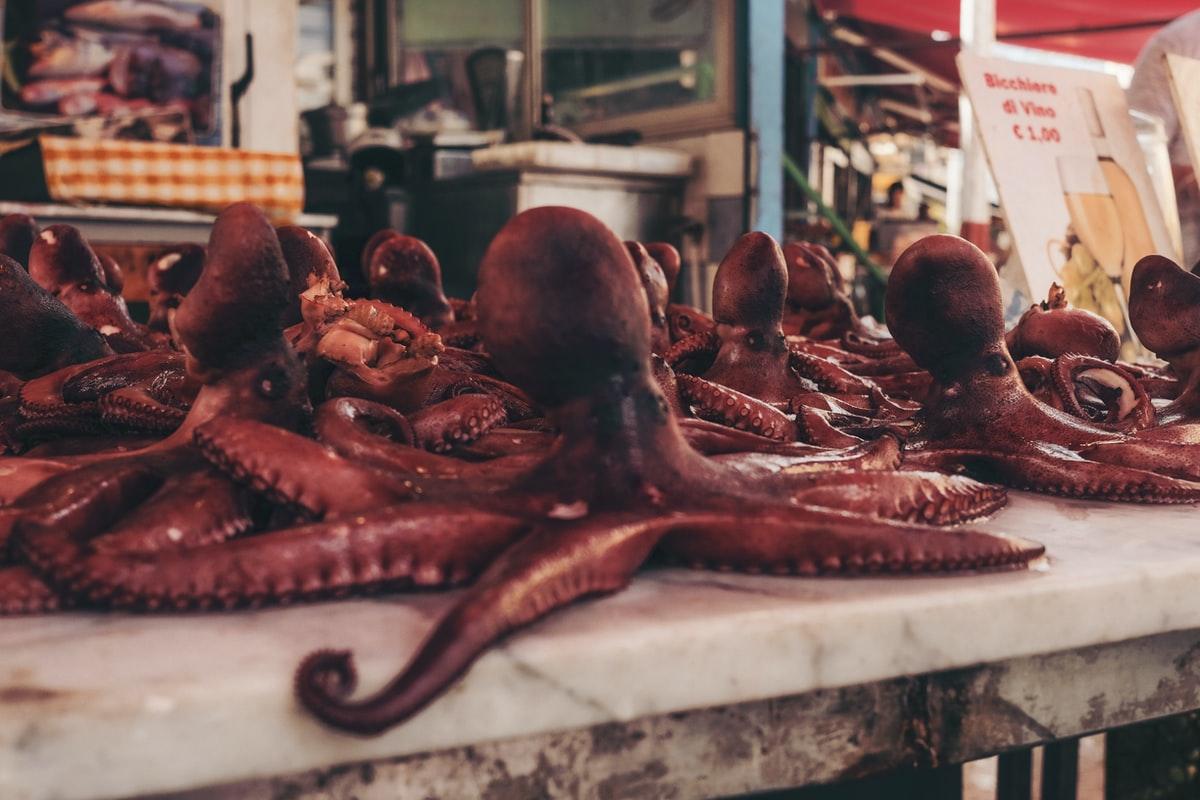 Palermo's oldest market, of Arab origin like the Capo market and the more famous Vucciria market, is a veritable riot of colours, flavours, smells and sounds. A crazy synaesthetic contagion that stretches across an entire district, with stalls and shops(Putìe) displaying all the merchandise: fruit and vegetables, meat, fresh fish still alive. And lots of street food, ranging from panelle sandwiches to'Pollanche', boiled corn on the cob, boiled potatoes, octopus, prickly pears and more. An experience not to be missed.
Practical info: directions, times and prices
How to get there: From the Central Station, take Corso Tukory and access the market from Via Dalmazio Birago (don't worry, you'll see it) - Get directions
Hours: always accessible (preferably in the morning, it is busier)
Ticket price: free
Visit the market in the evening and discover street art: if during the day you go to the market to do your shopping, in the evening it has become a nerve centre of Palermo's nightlife, with lots of pubs, clubs and stalls animating the nights. In addition, as part of the recent redevelopment of the area, many Palermo artists have decorated the walls of the district with beautiful murals, especially in the square known as Ecce Homo.
10 - Church of Jesus or Casa Professa
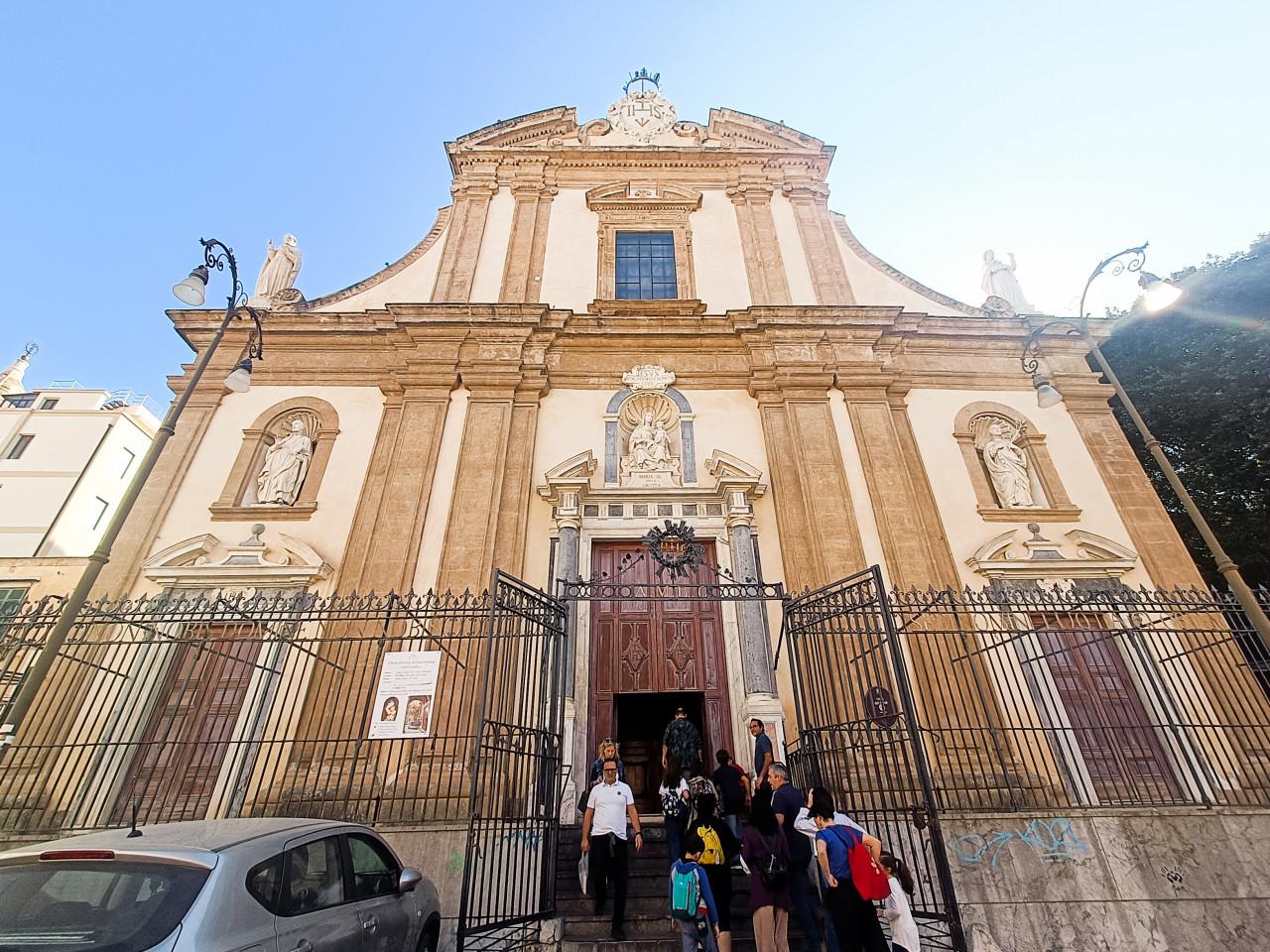
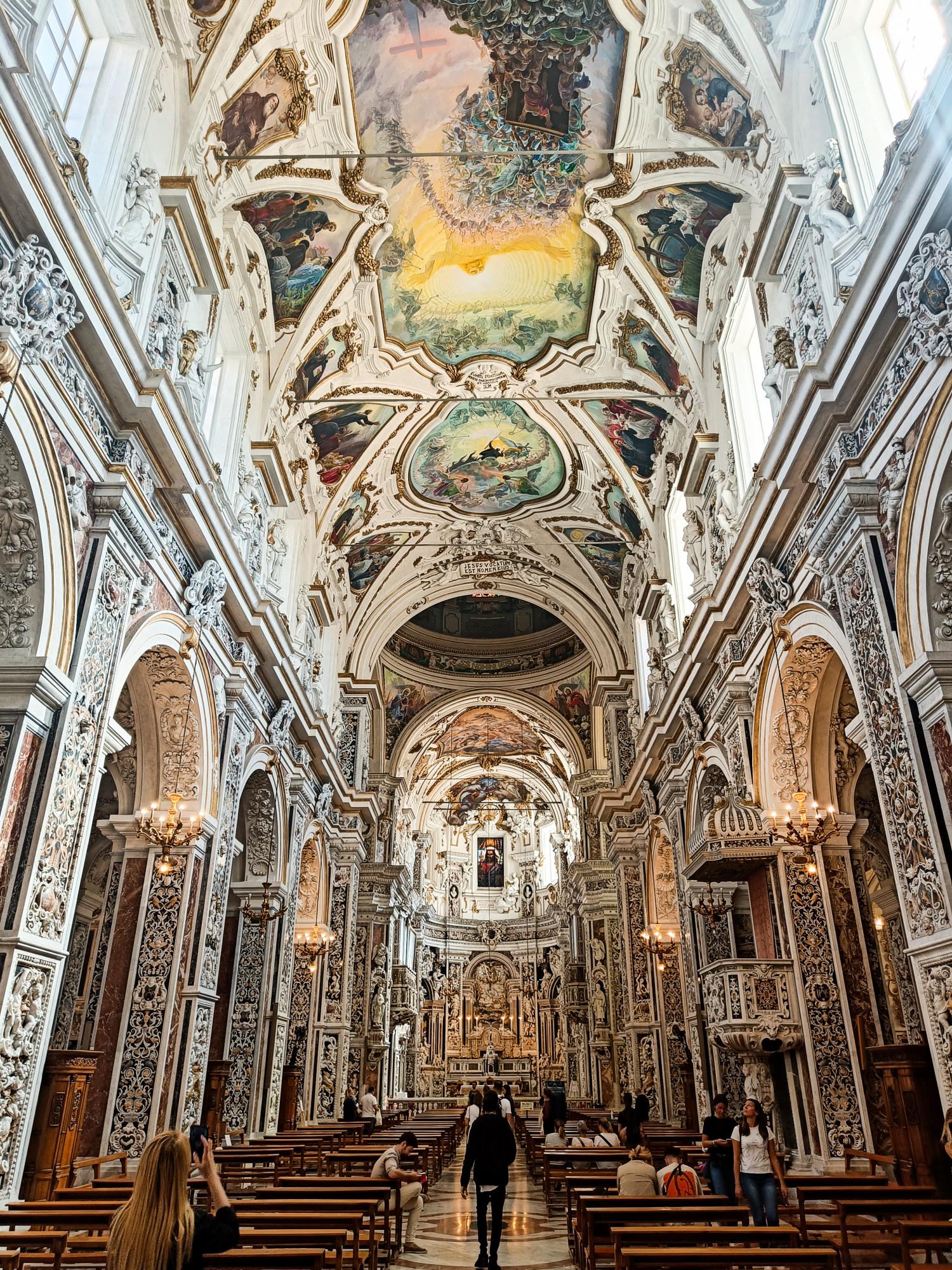 This is probably the most important Baroque church in Palermo. Located in the Albergheria district, on the edge of the Ballarò market, it is an impressive blaze of Baroque. From the outside, you wouldn't think so, but the interior is an uninterrupted succession of decorations, with opulent stuccoes, frescoes, marble ornaments, mixed marbles and tracery, all created by the greatest exponents of seventeenth-century art and sculpture: Serpotta, Marabitti, Vitagliano, Pietro Novelli, Paolo Amato, Camilliani.
In 1892, the Gesù Church was declared a National Monument.
Practical info: directions, opening hours and prices
How to get there: piazza Casa Professa 21, bus n° 104 or Green Line - Get directions
Hours: Monday to Saturday from 9:30 am to 3:30 pm. In August from 9:30 a.m. to 6:30 p.m.
Ticket price: €2.00
11 - Martorana Church
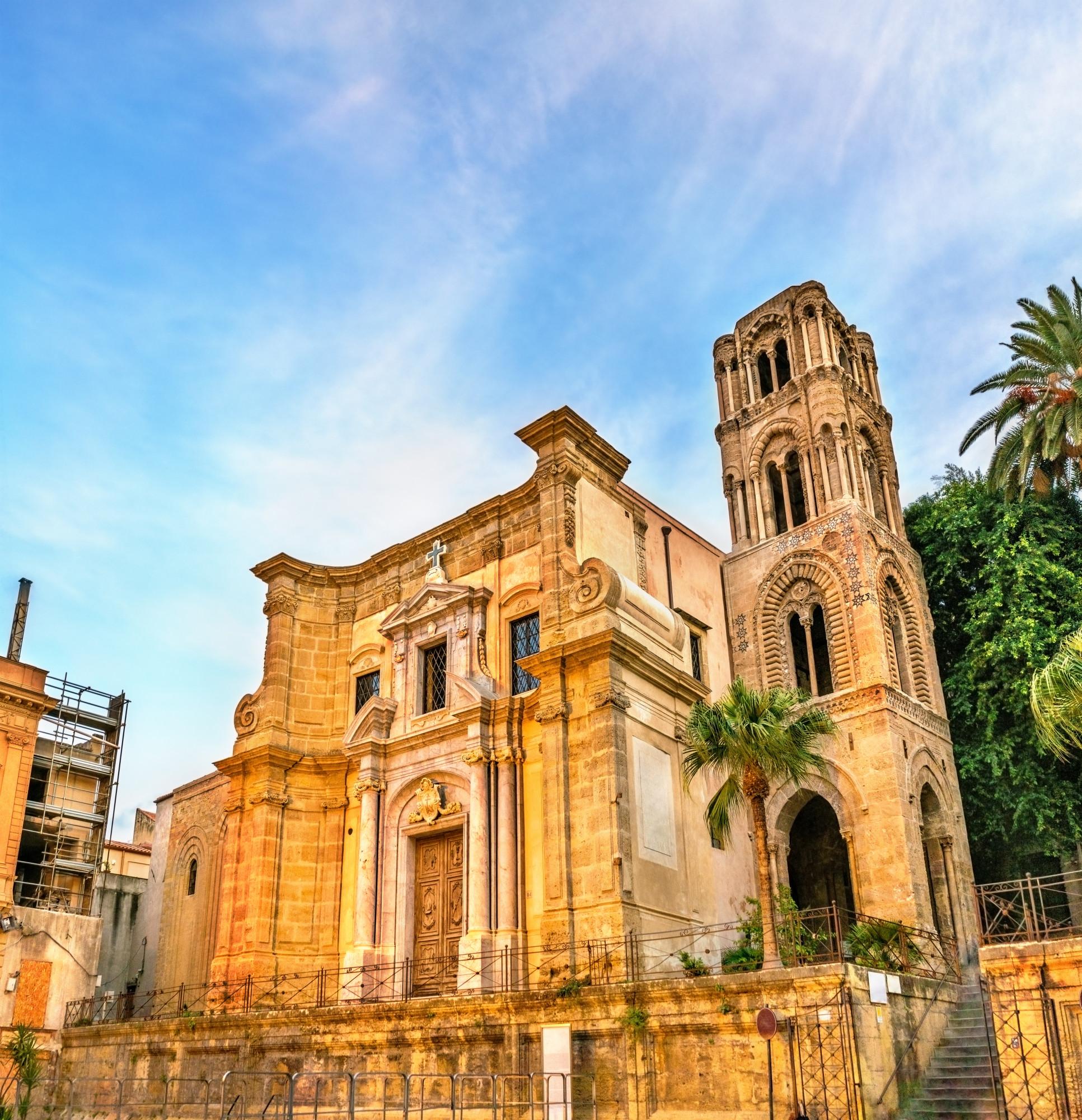
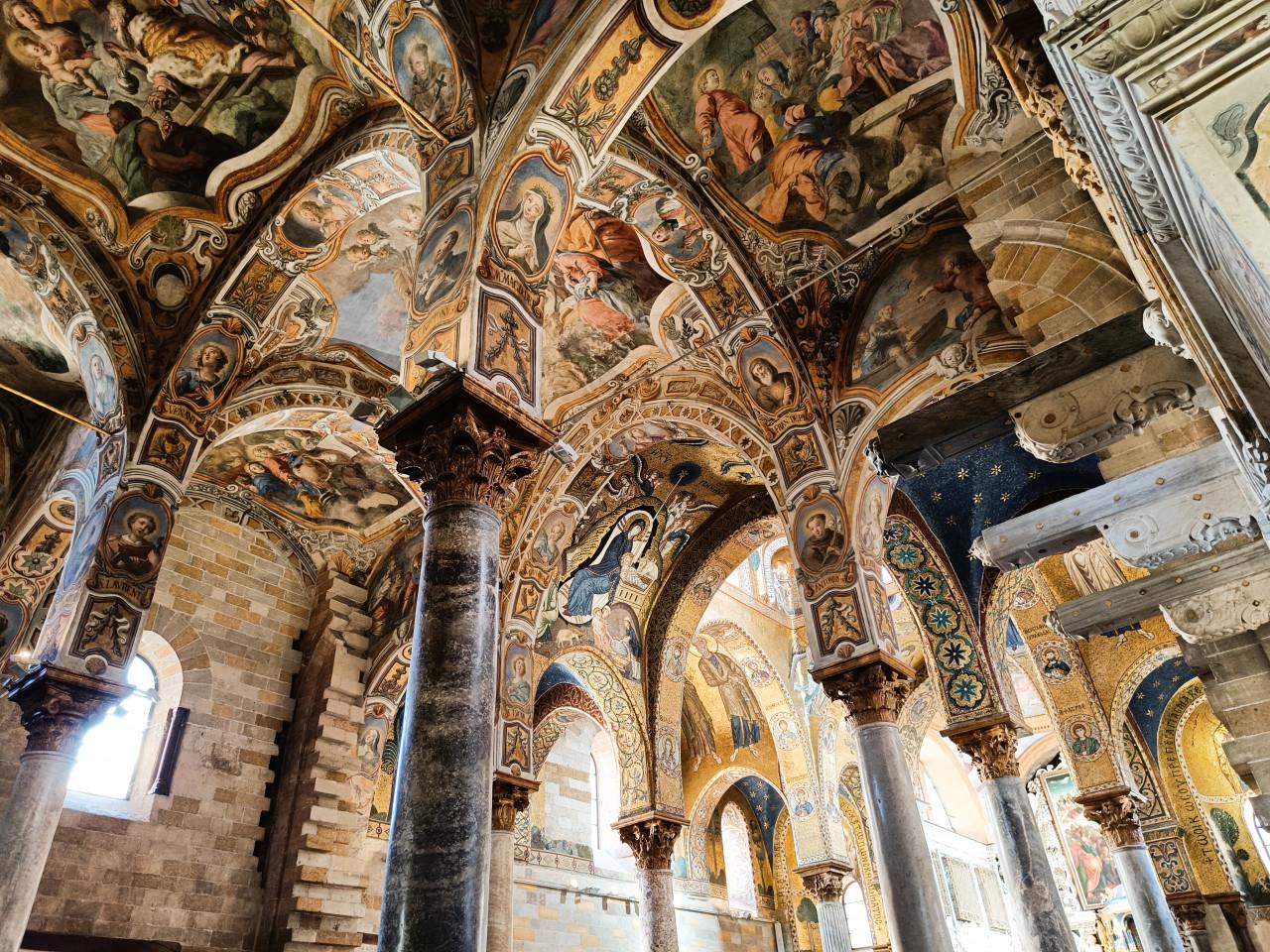 Built in 1143 by Admiral George of Antioch, a faithful servant of the Norman King Roger II, the Martorana Church is one of the most fascinating Byzantine churches in Italy. For some, it is even the most beautiful because of the contrast between the Arab-Norman style, which is why it is listed as aUNESCO heritage site, and the later Baroque additions of the 17th century. In 1433, Alfonso of Aragon ceded the church to the nearby Benedictine monastery founded by the noblewoman Eloisa Martorana (hence the name of the church). The church is part of the property of theEparchy of Piana degli Albanesi and although subject to the Holy See, it follows the Orthodox liturgical calendar. The mosaic decorations inside are the highlight of the building. Above all, the 'Christ Pantocrator' at the top of the dome.
Practical info: directions, opening hours and prices
How to get there: Piazza Bellini 3. From the Central Station take bus 102 to the 'Roma-Lattarini' stop - Get directions
Hours: Mon-Sat 8:00 - 13:00 and 15:30 - 19:00. Sundays and public holidays 8:30 - 9:45 and 11:45 - 13:00
Ticket price: Full €2.00. Reduced €1.00
The origin of the 'frutta martorana': around 1500 Emperor Charles V arrived in Palermo after the victory at Tunis. The orange garden of the church was bare, as it was September. So the nuns made fruits out of almond paste, and decorated the orchard, which took on an almost fairy-tale appearance! Thus the 'martorana fruits' were born.
12 - Piazza Marina, Palazzo Steri and Giardino Garibaldi
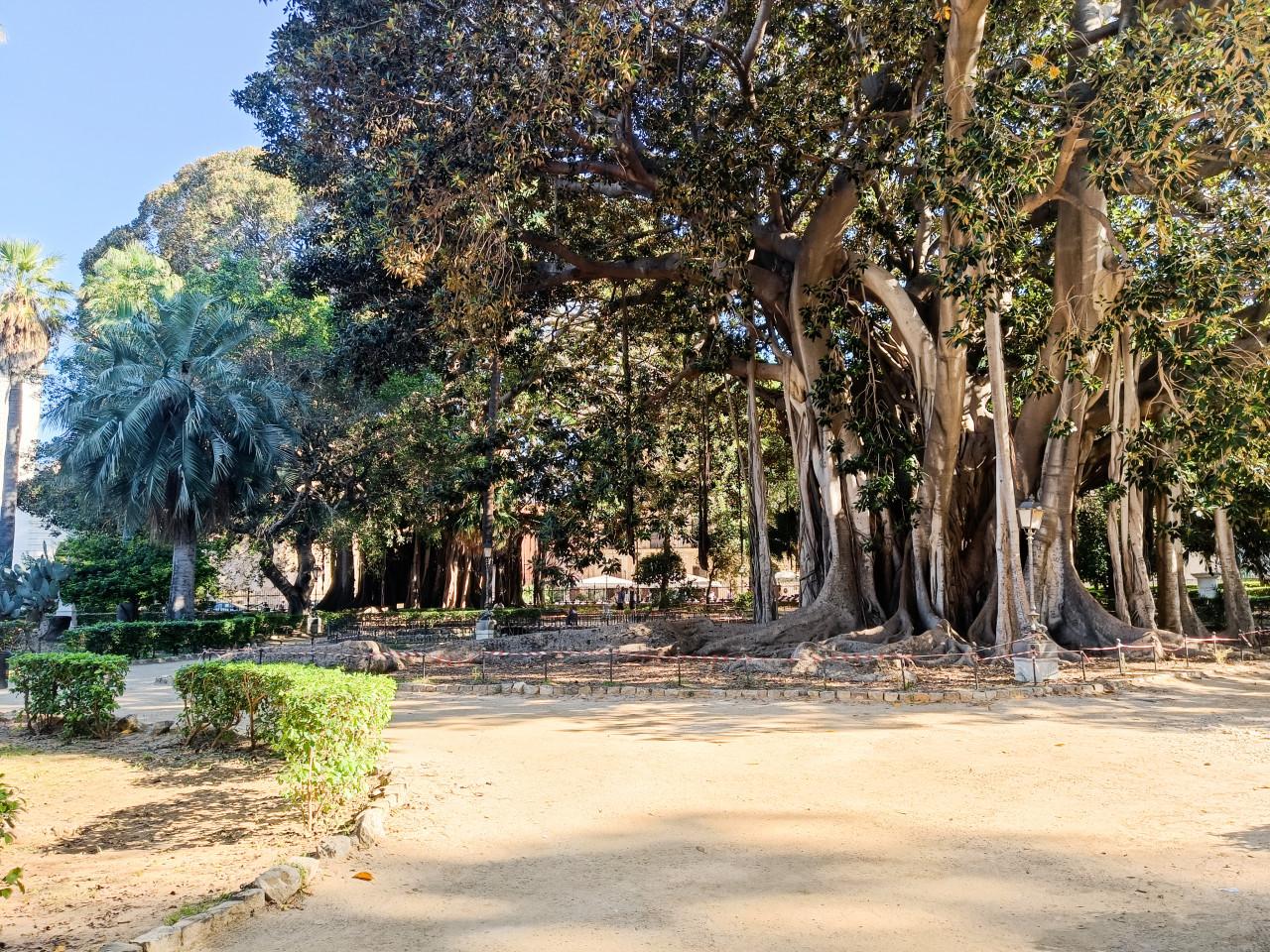
 At the end of the Cassaro, Corso Vittorio Emanuele, heading towards the sea, is one of Palermo's most beautiful squares. Here in Piazza Marina is the imposing Giardino Garibaldi, with specimens of Ficus Magnolioides as big as a football pitch covering the whole square with their foliage. On Sundays, a beautiful antiques market is held in the square, with valuable pieces and collectors' items, such as vinyls, panini sticker albums, etc.
All around, a succession of historical palaces, such as Palazzo Mirto, Palazzo Abatellis (home of the Sicilian Regional Gallery and housing Antonello da Messina's masterpiece, the Annunziata), Palazzo Galletti di San Cataldo.
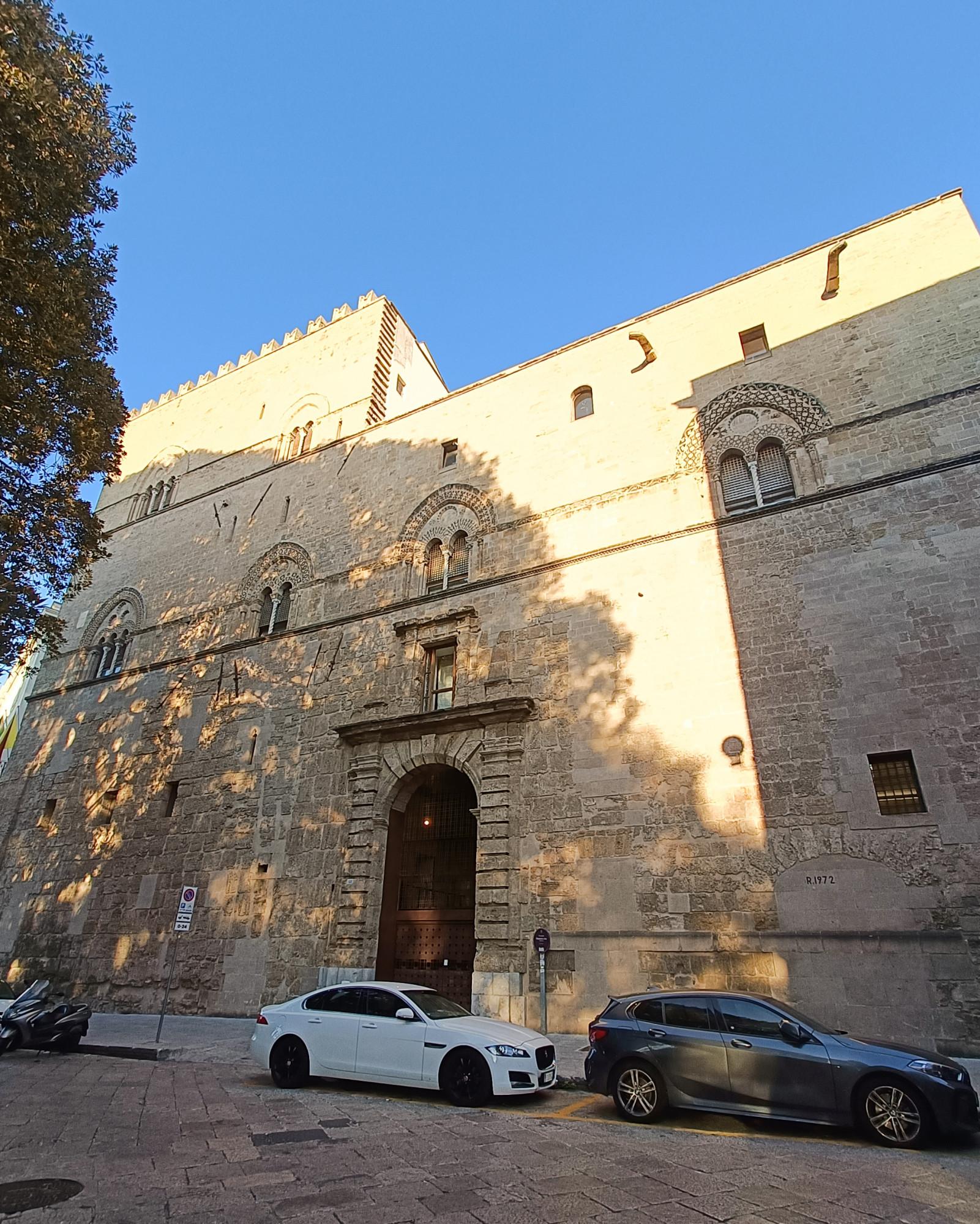
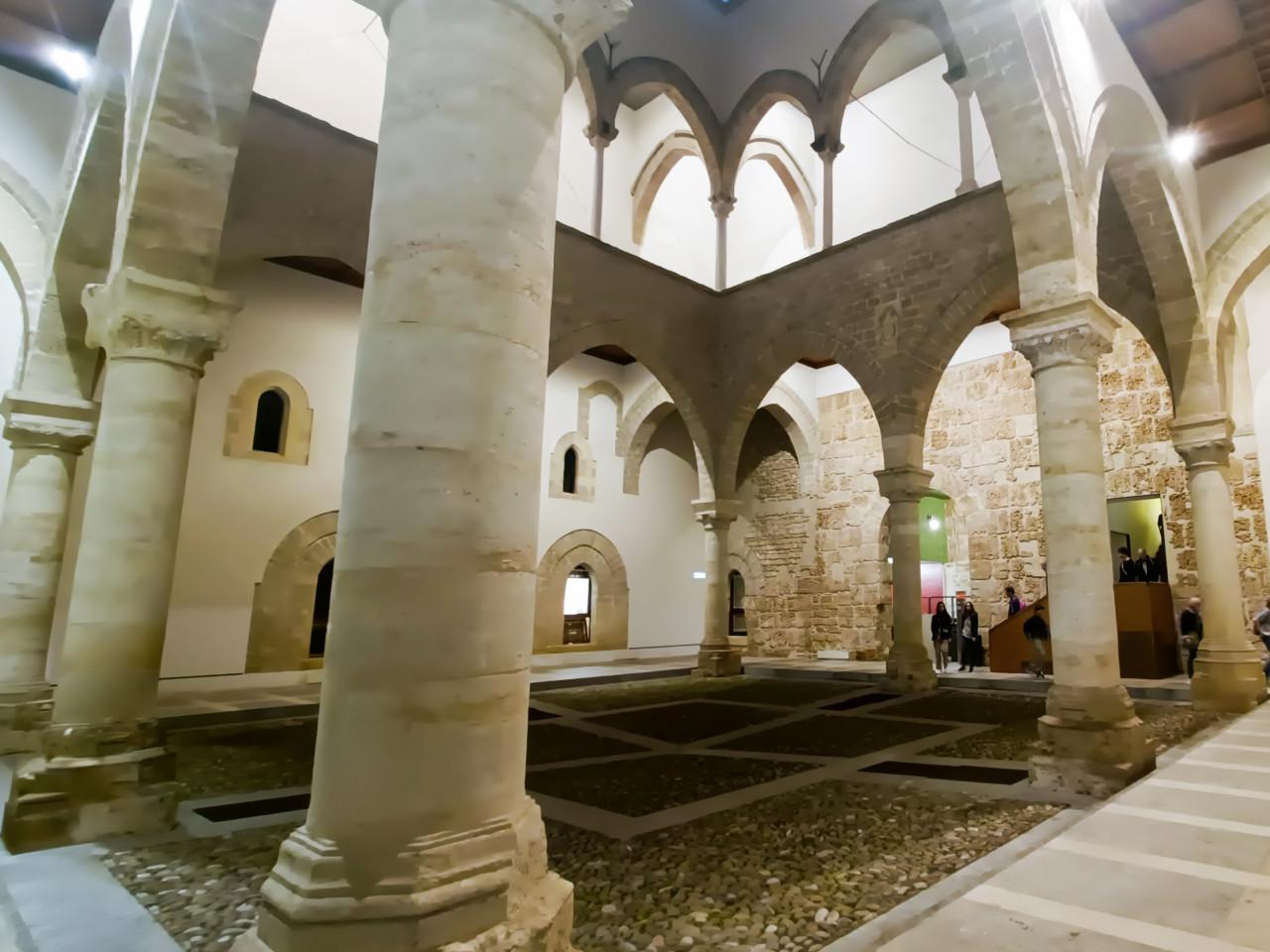
Prominent among these is the Palazzo Chiaramonte Steri, seat of the University's rectorship. The palace houses at least three areas of astonishing value: The Museum of the Spanish Inquisition, with the prisons where those accused of heresy were detained. Here you can still see the writings on the walls of the condemned men, made with blood, urine and tuff scraped off the walls (in some cases, there are real masterpieces); the original painting of the Vuccira by Renato Guttuso); a 14th-century hall with a unique wooden ceiling, frescoed with stories from the Old and New Testaments, tales of chivalry, the Trojan War, Tristan and Isolde, the Judgement of Solomon, etc.
Practical info: directions, times and prices
How to get there: Piazza Marina. From Central Station take bus 101 to the 'Roma Lattarini' stop. Continue on foot along Corso Vittorio Emanuele for about 500 metres - Get directions
Timetable: The square is always accessible. Palazzo Steri Tue-Sat 09:00-13:00 and 14:30-18:30. Sunday 10am-2pm
Ticket price: Full price €5.00, reduced €3.00. Ticket includes guided tour
Discover the secrets of the Vucciria: Guttuso's canvas hides many curiosities. Did you know, for example, that the women portrayed include both Guttuso's wife and... his lover? And that there is also Guttuso himself...?
13 - The Kalsa
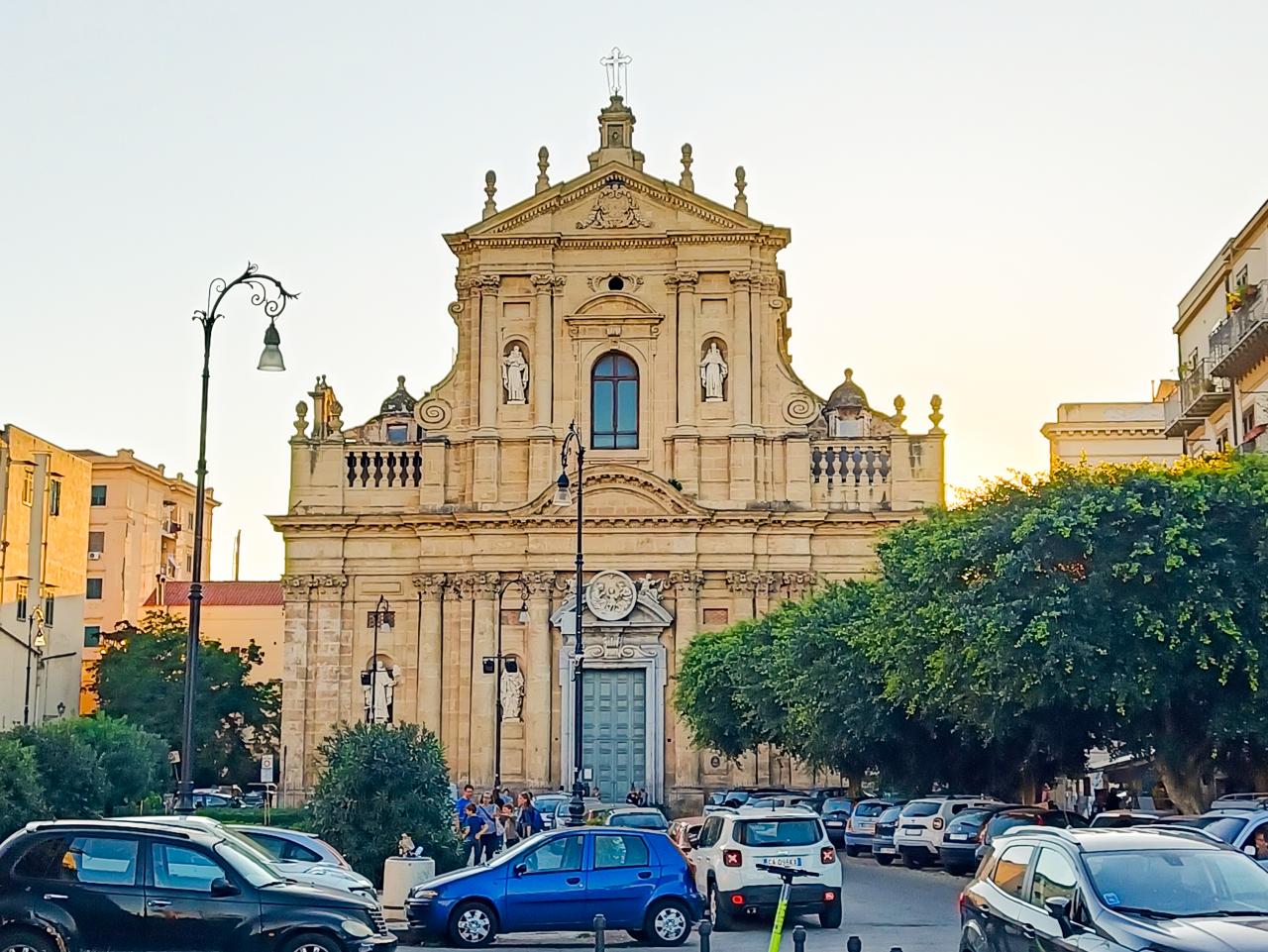
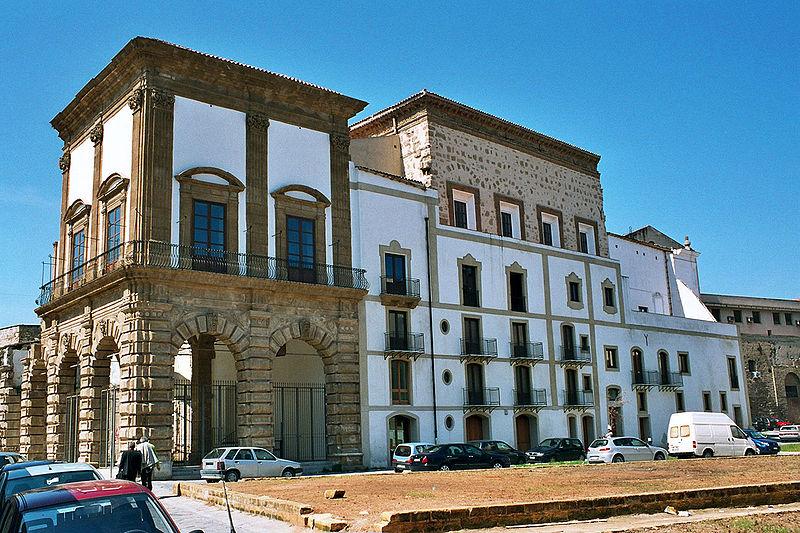
 To visit the Kalsa (from the Arabic al-Khalisa) is to immerse oneself in what for centuries was the privileged place of Palermo's politics, finance and culture. There is so much to see in this area.
Palazzo Mirto, Palazzo Abatellis and the Oratorio dei Bianchi are the places where the glorious past of Kalsa and Palermo is jealously guarded.
Palazzo Mirto was for four centuries the home of Sicily's oldest Norman family, the Filangieri Counts of San Marco, later Princes of Mirto.
Palazzo Abatellis is a museum space with numerous medieval, modern and archaeological collections accumulated during the 19th century thanks to private bequests and the suppression of religious corporations. In particular, here are the masterpieces ofthe Annunziata by Antonello da Messina, and the Triumph of Death, by an unknown artist, but of such stature that it inspired Picasso for his'Guernica'.
Finally, the Oratory of the Whites is the seat of the Noble, Primary and Royal Company of the Holy Crucifix. Here, among other things, you can admire the wooden gate'Bab el Fotik', renamed'Gate of Victory' by the Normans who ended the long Arab domination of the city.
Finally, there is also Piazza Magione, a kind of esplanade with a green lawn and all the crumbling buildings around it. These are the remains of World War II bombings. In the evening, Piazza Magione is a meeting place for the young people of Palermo. The square is also home to the beautiful Church of the Magione.
This is also where the No Mafia walking tour stops to find out more about the Mafia and the civic movement against its power.
Practical info: directions, times and prices
Directions: From Central Station take bus 103 to the "Vittorio Emanuele - S. Maria Della Catena" stop - Get directions
Hours: Tuesday to Saturday 9 a.m.-6 p.m. The Oratorio dei Bianchi is also open on Sundays from 9 am to 1 pm. All closed on Mondays
Ticket price: €10.00 cumulative ticket valid for 3 days. Reduced €5.00
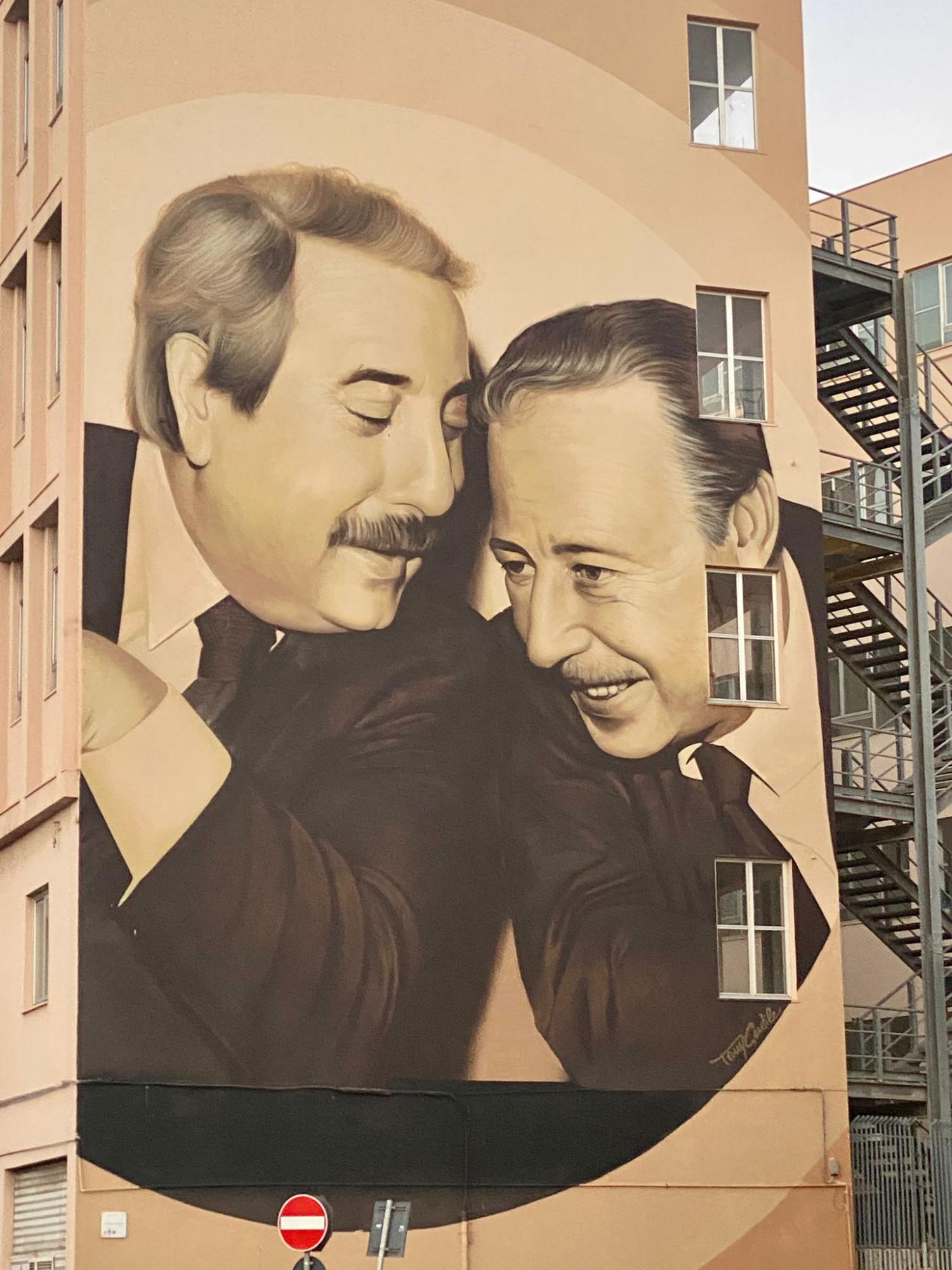
Street art and street food in the Kalsa: this area is also known for being the birthplace of Falcone and Borsellino. All around Piazza Magione and on the edge of the district, towards the Cala, there are murals both in their honour and of various kinds. The most beautiful is the one in Via Mura della Lupa, near the Cala. Also, in Piazza Kalsa is Chiluzzu, one of the best street food in the city!
14 - Church of the Spasimo
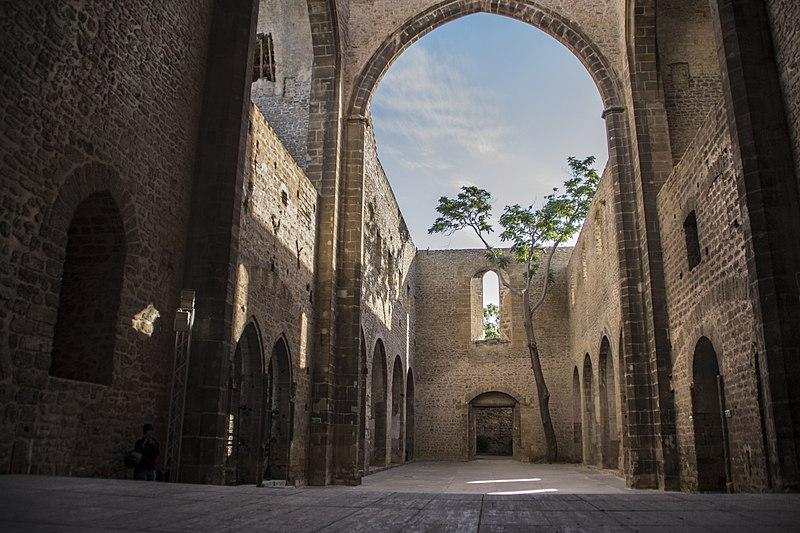 Photo by Cristiano Drago.
 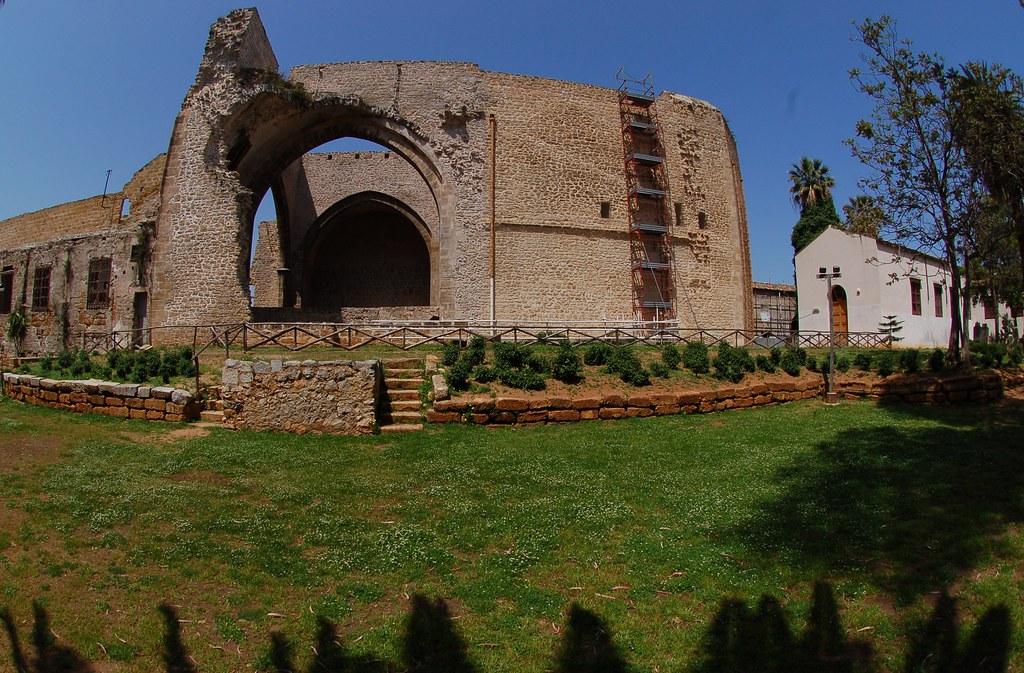 Photo by Rino Porrovecchio.
 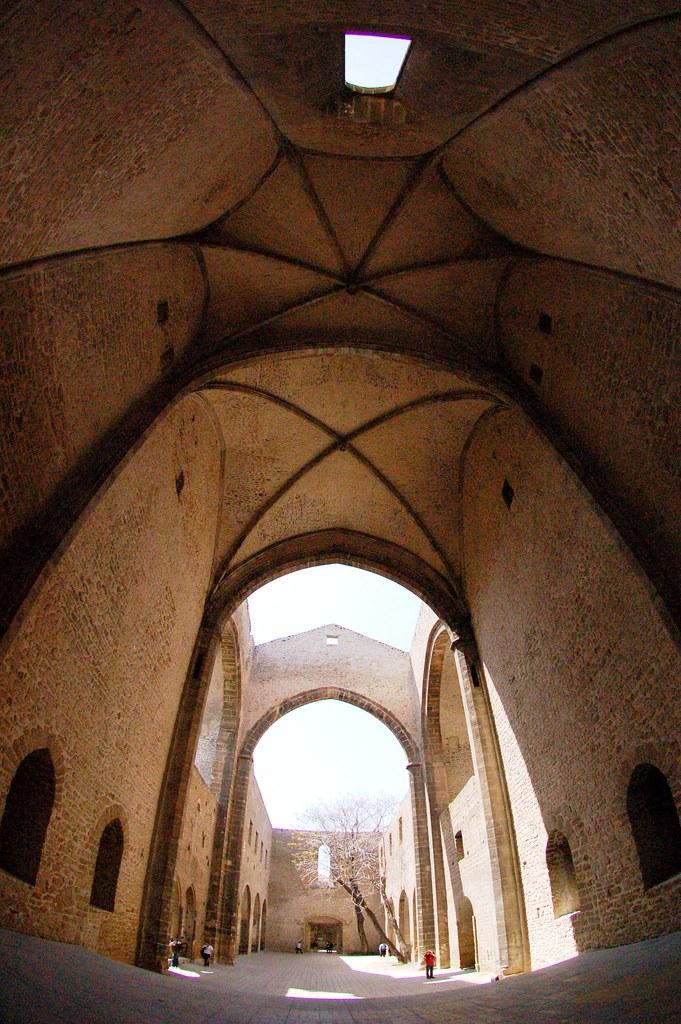 Photo by Rino Porrovecchio. Located in the Kalsa district, roughly behind the Botanical Garden, the Church of Santa Maria dello Spasimo is a real experience. Unlike Palermo's rich Baroque and Arab-Norman churches, this one has a single nave made of bare stone and... open-air. The collapsed ceiling was never rebuilt, which gives the space an emotional universality. Also very symbolic is the tree that rises at the end of the nave along the entire length of the wall, until it surpasses it.
In reality it must have been a very important church, just think that a canvas was commissioned by none other than Raphael (now in the Prado in Madrid).
Today it has found a different use, and is in fact a privileged location for music and film festivals, as well as the seat of the Brass Group of Palermo: attending a concert here is priceless!
Practical info: directions, times and prices
How to get there: Via Dello Spasimo, 10 - Get directions
Hours: daily 8am-8pm
Ticket price: full price €2.00 reduced €1.00
15 - Botanical Garden and Villa Giulia
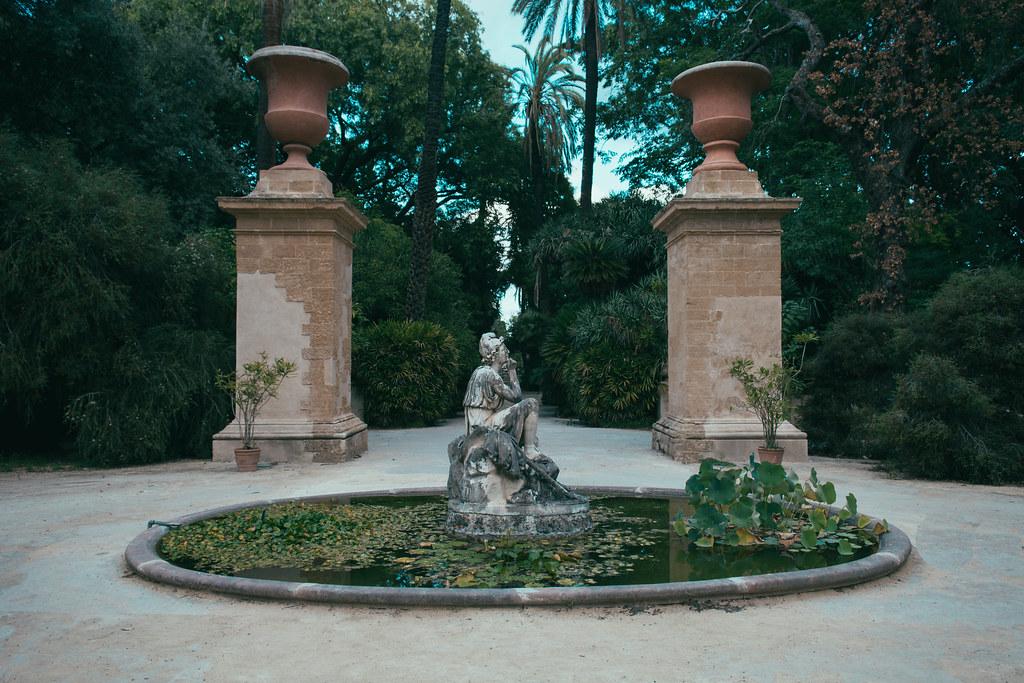 Photo by Federica Di Fiore.
 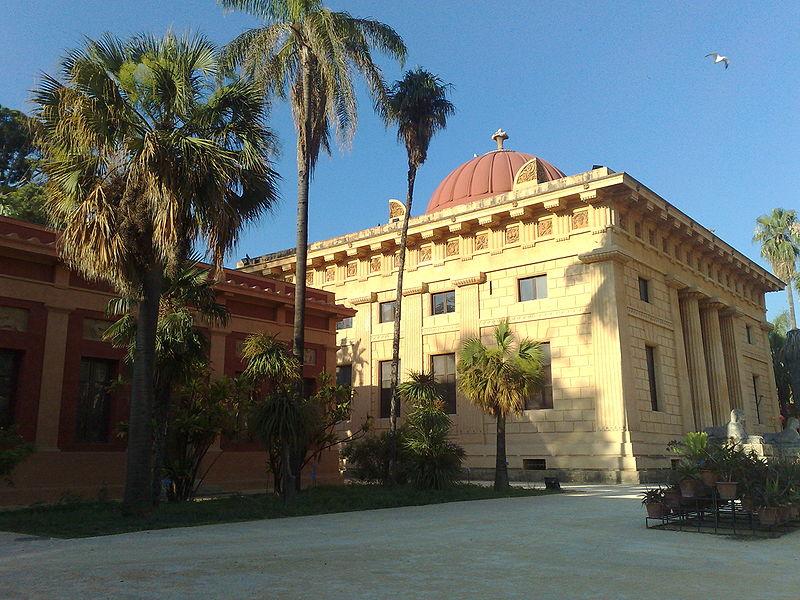 Photo by Dedda71. Another green area of the city with exotic charm. Founded in 1789 and designed by French architect Leon Dufourny, with its yellow and red buildings and central Gymnasium, it looks like a piece of Africa in Sicily.
The Garden and the Villa are not attractions to visit, but real places to stay, to experience for at least half a day. With the chirping of birds in the background, you can stroll around admiring the various plant species arranged in precise order according to Linnaeus' order. Greenhouses, aquatic systems, orchards, aromatic plants, palm groves... Don't miss the ficus magnolioides, the largest in Europe!
Villa Giulia, in turn, is the oldest garden in Palermo. It is a square divided into four with a circular space in the centre and various esoteric elements.
Practical info: directions, opening hours and prices
How to get there: Via Lincoln 2/b. From the Central Station take bus 102 (Roma - Palazzo Ganci stop), then walk about 900 metres - Get directions
Hours: winter 9am-6pm, summer 9am-8pm
Ticket price: Villa Giulia free. Botanical Garden €5.00, concessions €3.00
16 - San Giovanni degli Eremiti
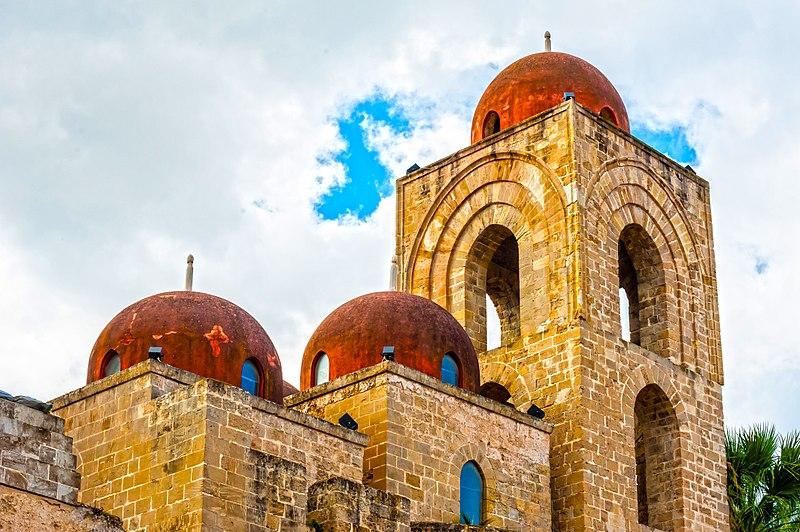 Photo by Ciambra.
 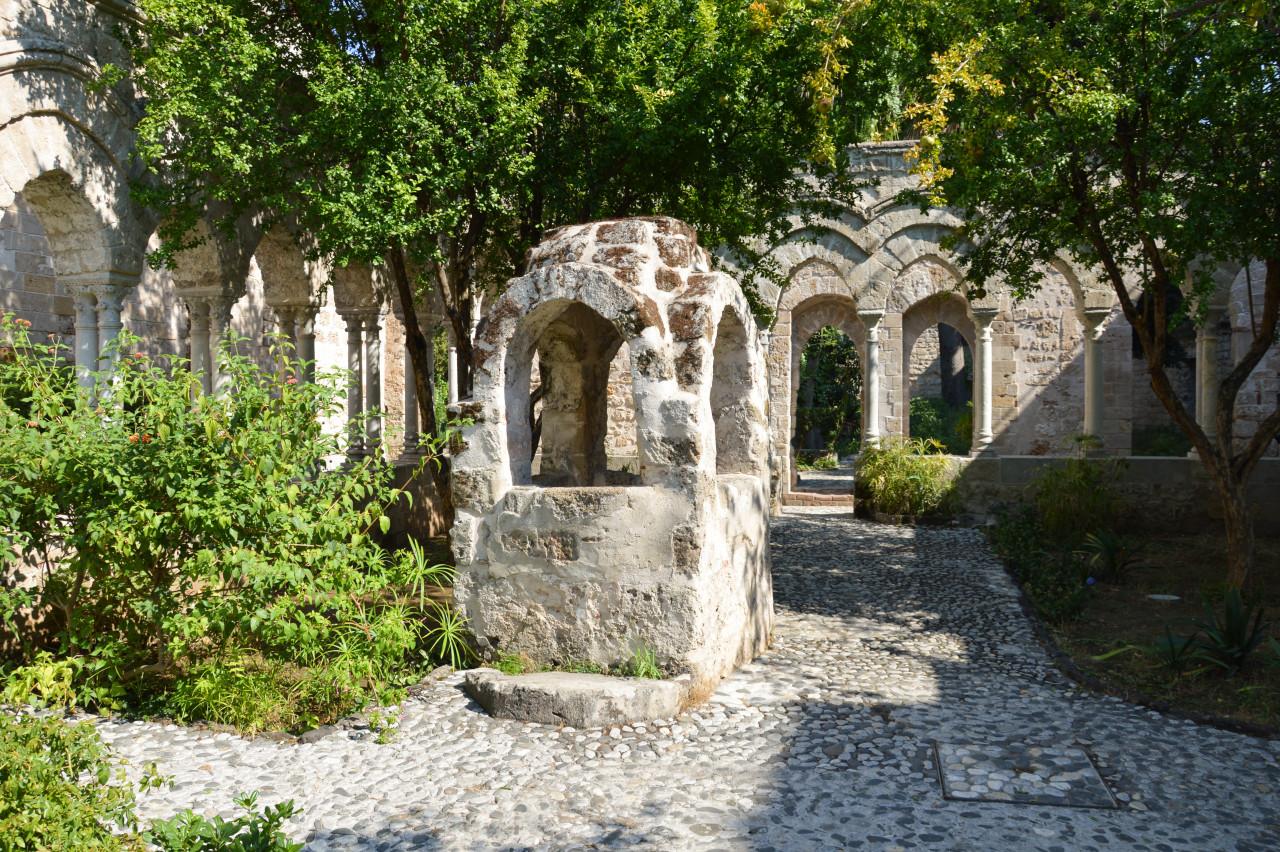 Medieval Norman church, famous and easily recognisable from the outside thanks to its deep red domes, in Moorish style, a clear reference to the period of Arab domination. Its interior is also worth a visit. The cloister and its gardens are truly splendid, and are the perfect place to rest from the hustle and bustle of city life.
The church itself has very simple lines, with an undecorated interior and bare stone. What is striking and fascinating is the mix of Muslim and Norman styles.
Practical info: directions, times and prices
How to get there: Via dei Benedettini, 20. From Central Station take bus 110 to the 'Imera - Colonna Rotta' stop. Continue on foot for approximately 540 metres - Get directions
Hours: 9:00am - 6:30pm
Ticket price: Full €6.00, reduced €3.00
The ticket may seem expensive (€6.00), according to many it is not worth it and it is better to limit yourself to the outside. Instead, we believe it is worth it, the cloister is a corner of paradise, and if you are in Palermo you certainly don't want to miss a milestone of Arab-Norman architecture.
17 - The Serpottian Oratories
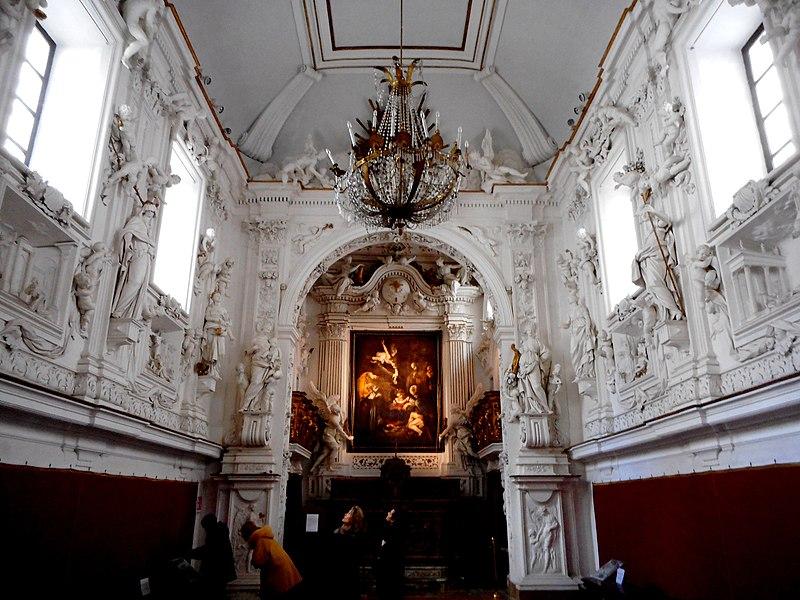 Photo by Stendhal55. Palermo's oratories are an impressive treasure trove of treasures and stuccoes, one of the grandest examples of the mastery of Maestro Serpotta and his followers. Putti, festoons, garlands and naturalistic motifs surrealistically decorate these rooms, which have become veritable exhibition museums.
There are many oratories in Palermo: the Oratorio dei Bianchi, in Via dello Spasimo in the Kalsa, the Oratorio dei Santi Pietro e Paolo, between the Cathedral and the Archbishop's Palace, the Oratorio del SS. Rosario in San Domenico, the latter with paintings by Borremans and Van Dyck, the Oratorio del SS. Rosario in Santa Cita, with the 'little theatres' of the mysteries of the Holy Rosary by Serpotta. The history of the Oratory of San Lorenzo is particular: here, in 1969, the painting of the 'Nativity with Saints Francis and Lawrence', a masterpiece by Caravaggio, was stolen. The painting was never found, and today the niche houses a copy. Finally, the Crypt of the Oratory of Death in Sant'Orsola, in which master Serpotta first enriched his figurative repertoire with motifs related to death (skulls, skeletons, bones, etc.). This oratory also contains a system of trapdoors and colatoires for preserving corpses.
18 - Mondello
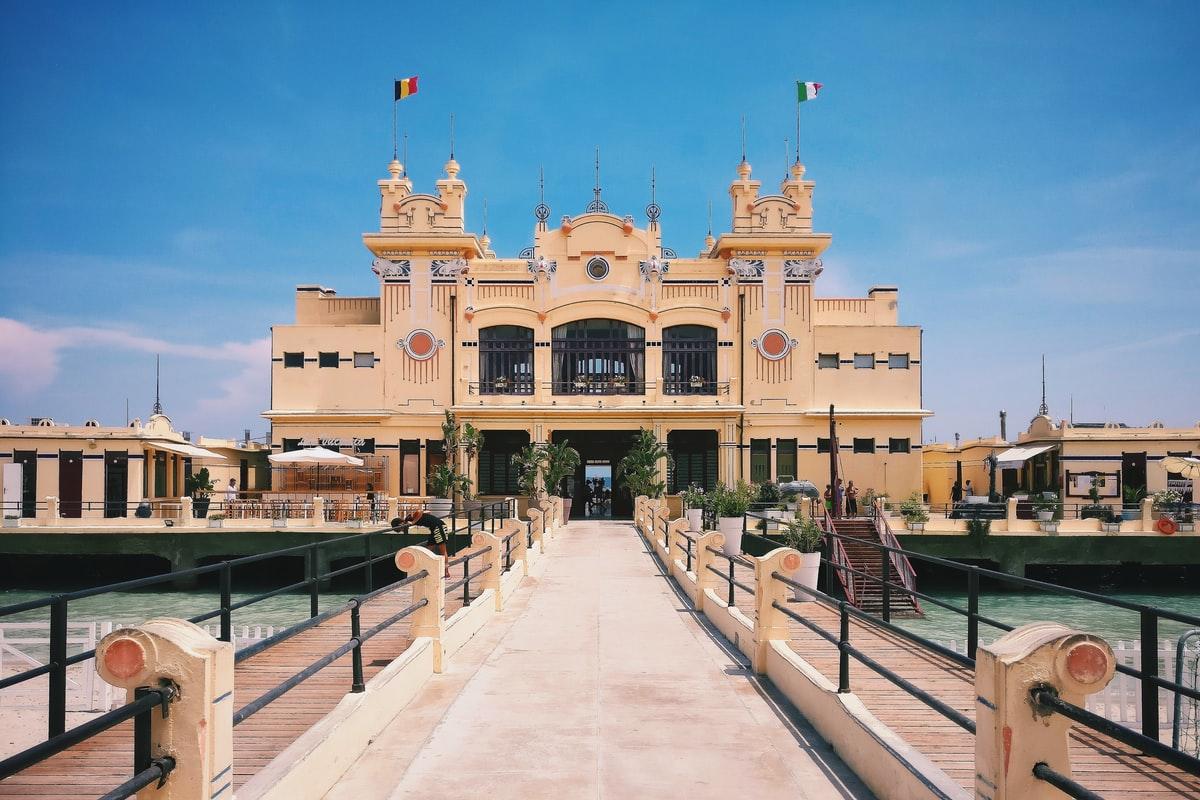
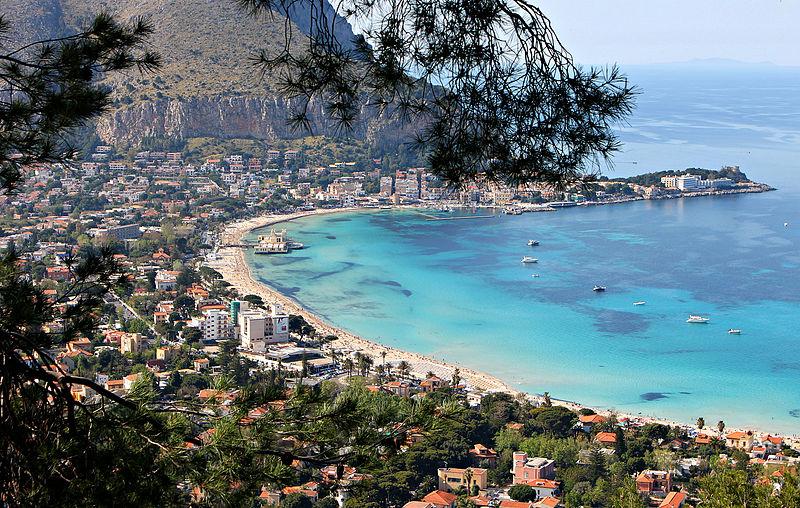 Photo by Andrea Calcagno. Let us clarify: Mondello is not a town near Palermo, it is a district of the city. It is a relatively modern, wealthy, elegant area. Don't believe that it was born out of the reclamation of a marshy area! Today it is the beach of the people of Palermo, full of Art Nouveau villas, tree-lined avenues, with a splendid beach of white and golden sand, lidos, bathing establishments, kiosks, restaurants and clubs. In summer it explodes with people and it is not easy to find a free corner on the beach.
There isalso an alleged 'haunted house' here: it is a Liberian villa that was reportedly used as a brothel by Nazi and Fascist soldiers during World War II, who were killed by an Allied raid.
It is 12.5 km from Palermo. It can be reached via the SS113, the E90, but it is very nice to get there from the inner road of the Parco della Favorita to Viale Margherita di Savoia. Journey time 20 minutes - Get directions.
19 - Sanctuary of Santa Rosalia on Monte Pellegrino
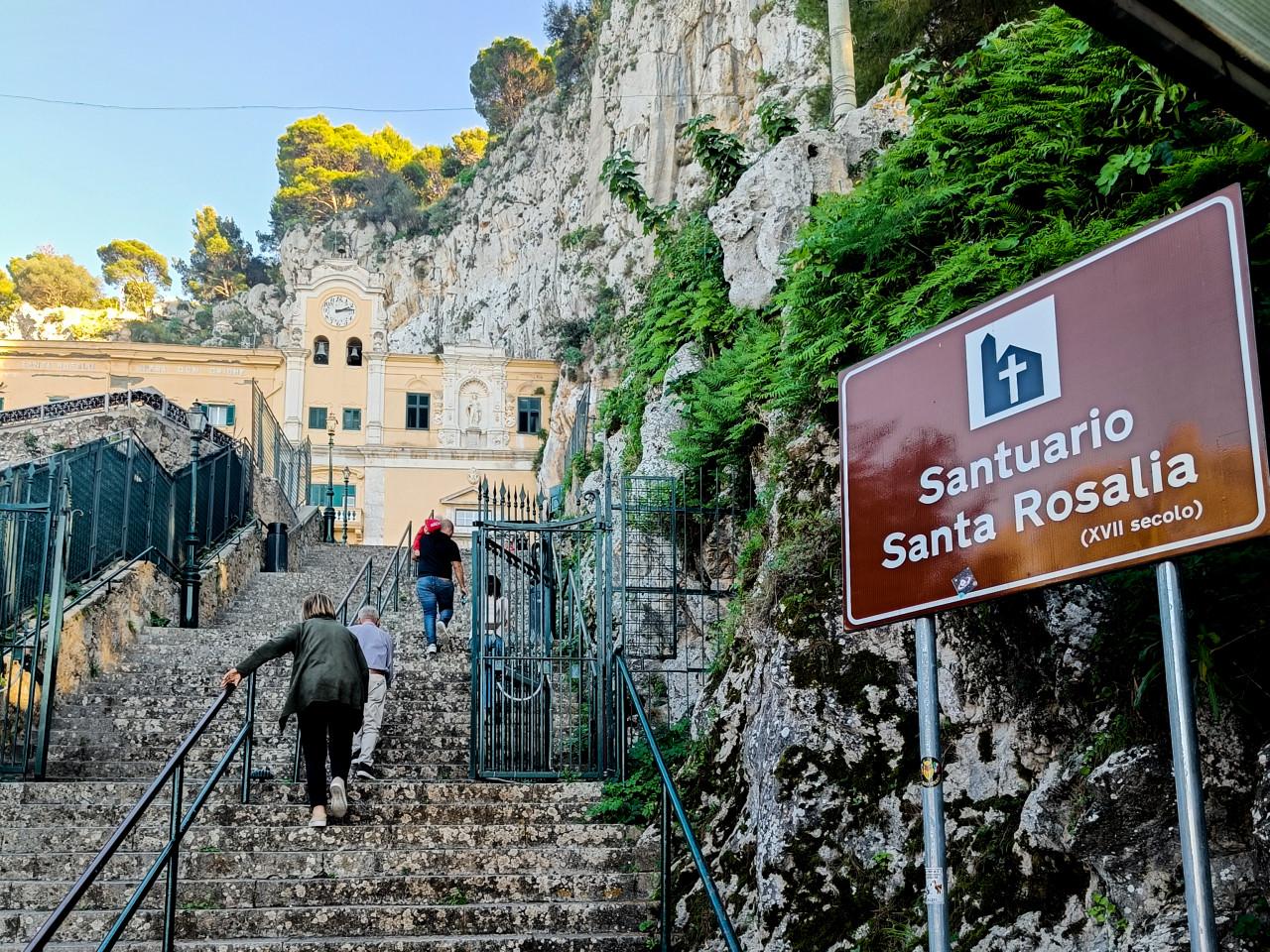
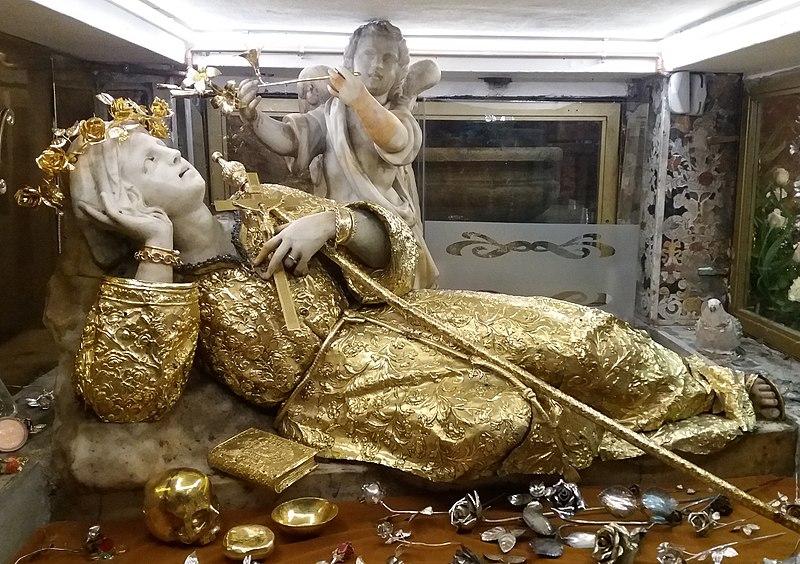 Photo by Gaetano Ceravolo.
 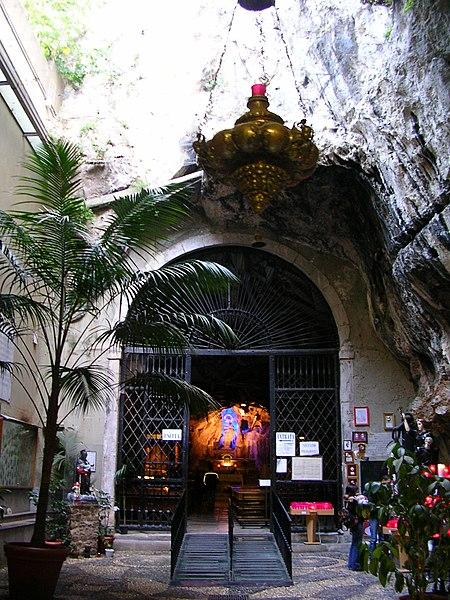 Photo by Giuseppe ME. Situated almost on top of the promontory, the sanctuary is located inside a cave, recalling the miraculous finding of the saint's bones that saved the city of Palermo from the plague in 1600. Entering the ravine, on the left, the statue of the saint is in fact placed on a canopy, made of white marble and wearing a golden foil robe.
The people of Palermo used to make'l'acchianata' (the ascent) on foot to the sanctuary on the evening of 3 and 4 September. To punctuate the stops along the way, votive chapels have been installed. It starts from Largo Antonio Sellerio and climbs the 'Scala Vecchia' in a distance of about 4 km. We recommend that, after reaching the sanctuary, you also stop at the Belvedere in front of the large statue of St Rosalie looking out over the sea. On the way to the belvedere you will cross the Gorgo S. Rosalia, an artificial pond. The difficulty of the route is medium-low, the most challenging part being the initial jump with a good height difference.
Practical information: directions, times and prices
How to get there: On foot from Largo Antonio Sellerio up Via Santuario Monte Pellegrino (La Scala Vecchia) for 4 km. By car from Via Pietro Bonanno - Get directions
Hours: Fri-Sat-Mon 10am-6pm. Sunday 8am-6pm
Ticket price: free
The holy water comes from here: take a look at the ceiling. The dome is covered with metal sheets that channel the water that comes out of a crevice in the rock. This channelled water is used to fill the fonts at the entrance to the church!
20 - Chinese Palace
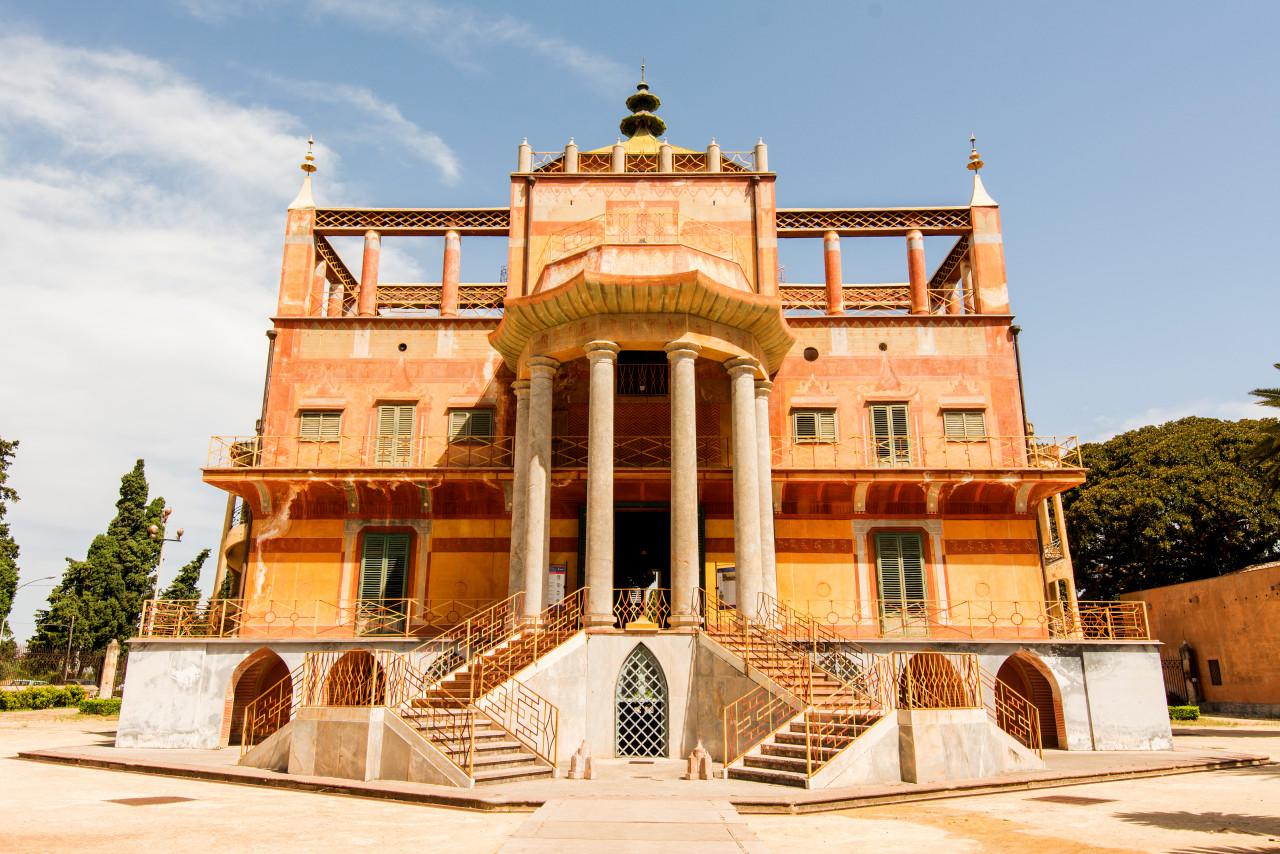 Also outside the centre, at the end of the Parco della Favorita, is the Real Casina Cinese, this exotic building whose construction was commissioned by Ferdinand I of Bourbon, the 4th King of Naples. The Chinese House is a veritable Wunderkammer, i.e. a marvel characterised by decorations, tricks and various amenities, but also symbolism and esoteric meanings that cannot leave one indifferent.
Inside, note the Mathematical Table, an ingenious structure that protected Ferdinand IV's privacy since the sovereign did not like to be observed while he was intent on eating. It is basically a mechanism of pulleys and pulleys that, through circular holes, raises the ready-made dishes and then brings them down as soon as they are finished. This avoided being served and carried by servants, and the meal could be eaten in absolute privacy. To communicate with the servants there was an elaborate system of bells and coloured ribbons according to the dishes. A similar example can be found at Versailles.
Practical info: directions, times and prices
How to get there: Viale Duca degli Abruzzi. From Central Station take bus 616 (Duca Degli Abruzzi - Palazzina Cinese stop) or 544 (Resurrezione - Duca Degli Abruzzi stop) - Get directions
Hours: Tue-Sat 9:00 a.m. - 7:00 p.m. Sundays and public holidays 9am-1.30pm
Ticket price: free
Also visit the Parco della Favoritaand the gardens around it: while you're at it, take the opportunity to visit the beautiful Parco della Favorita, the largest urban park in Europe. The Palazzina Cinese is inside this park. If you are with children, almost adjacent is also the 'Città dei Ragazzi', a free playground set in a grove with rides, ponds and... Dinosaurs!
Other attractions to visit
The Foro Italico is a gigantic esplanade with a lawn that is almost on the seashore
Entrance to the historic Vucciria market
Hall of the Valguarnera-Gangi Palace
Chamber of Wonders
Springs of the Gabriele, an ancient
Cloister of the Cathedral of Monreale
1/11
The Foro Italico is a gigantic esplanade with an English-style lawn almost on the seashore; it is the perfect place to take a break from the hectic life of the centre. At the edge of the area is the Parco della Saluta, a large open-air play area overlooking the sea.
In addition to the famous Ballarò, we recommend a trip to the city's other markets: the Vucciria and Il Capo. Actually, the Vucciria as a market is now somewhat decayed, but in the evening it is an impressive anthill of people, with music, small bars, kiosks and street food stalls.
In Palermo, there are Art Nouveau palaces and villas of an almost embarrassing beauty: Palazzo Valguarnera-Gangi, where the film 'The Leopard' was filmed (visits only by reservation for groups of at least 20 people), Palazzo Braciforte, Villa Niscemi, Villino Florio, Palazzo Ajutamicristo, Palazzo Mirto, Palazzo Butera and many others are worth a visit.
An incredible recent discovery is the Camera delle Meraviglie (Chamber of Wonders), found by chance in 2003 during work on a flat belonging to a couple from Palermo. It appears to be a Muslim meditation place, rich in Arabic characters, gold and silver lettering, the vault painted with designs of oil lamps.
In the agrarian department of Palermo is the Fossa della Garofala, in the area of the Parco d'Orleans. This is a true geological oasis, originally the site of an Arab irrigation system as well as a citrus grove, but also a quarry for building material in Punic and Roman times.
The Sorgenti del Gabriele, an ancient 'water temple' that still supplies the Palermo aqueduct, is part of the Arab water system. A very suggestive visit to one of the city's many underground sections.
There arealso the many churches, such as the very special SS. Salvatorechurch, overlooking the Cassaro, with an elliptical plan and also used as an auditorium; or that of the Madonna della Mercede al Capo, which hides an entrance to Palermo's underground pass ages linked to the events of the Beati Paoli sect.
Finally, a visit to Monreale with its famous cathedral (€4.00) and cloister is a must. You can do this on a guided half-day excursion.
7 things to do in Palermo
Take a street-food tour
See a Puppet Show
Visit underground Palermo and the Qanats
Be seduced by Palermo's pastries
Discover the history of coffee at the Morettino Museum
Visit the Stanze al Genio House Museum
Enjoy the nightlife at the Vucciria
1/7
Take a gastronomic street-foodtour of the markets: try sfincione, arancine, panelle e cazzilli, pane ca meusa, stigghiole, frittola, quarume and all the specialities that have made Palermo the street-food capital of Europe. The panino ca meusa must be eaten strictly at Rocky's in the Vucciria! more info and reservations here
Attend a Puppet Show and visit the Pasqualino International Puppet Museum
Visitunderground Palermo and the ArabianQanats: discover the secrets of the sect of the Beati Paoli, according to many the forerunners of the Mafia, and visit the tunnels and water conduits of the ancient Arabian system.
Let yourself be seduced by Palermo's pastries: Sicilian cassata, cannoli, torta setteveli, but above all the sweets from the secret pastry shop of the cloistered nuns of the former Convent of Santa Caterina.
Discover the history of coffee at the Morettino Museum, an interesting exhibition of historical pieces, a library and collections from around the world.
Visit the Stanze al Genio House Museum, an impressive collection of majolica in a private home on Via Garibaldi in the Kalsa district.
Enjoy the movida at the Vucciria: in the evenings, Piazza Garraffello and Piazza Caracciolo become an impressive youth hangout with music, street food, bars inside shutters and outdoor grills. This area, as far as the port in Via Chiavettieri, is the hub of Palermo's movida. Naturally, the market is the main stop on the night-time street food tour, which also includes drinks and tastings.
What to see in a day
Visiting Palermo in a day is possible but be prepared to do a lot of walking. Wear comfortable shoes and if you visit the city in summer, bring a good reserve of water (during the middle of the day you may suffer from the heat). For more info check out the full itinerary.
Distance covered: 6 km / 1 h 16 min(show map)
9:00 - Ballarò
10:30 - Palace of the Normans and Palatine Chapel
12:00 - Cathedral
13:30 - Piazza Pretoria, Quattro Canti, Piazza Bellini and Martorana Church
14:30 - Church of the Gesu (Casa Professa)
15:30 - Massimo Theatre
16:30 - Politeama Theatre
18:00 - Walk between Cala and Foro Italico
19:30 - Piazza Marina and Vucciria
SEE ALSO: Palermo in a day itinerary
What to see in 3 days
Three days is a good amount of time to quickly visit all the main attractions of the Sicilian capital. Plus, with the right organisation, you can carve out a relaxing afternoon in the fantastic sea of Mondello
Day 1: Cape Market, Immaculate Conception Church, Sant'Agostino Church, Cathedral, San Giovanni degli Eremiti Church, Palazzo dei Normanni, Capuchin Convent and Catacombs, Zisa Castle
Day 2: Politeama Theatre, Teatro Massimo, Salinas Museum, Quattro canti, Pretoria Fountain, Piazza Bellini, Vucciria, Kalsa and Santa Maria dello Spasimo, Piazza Marina, Palazzo Steri, Garibaldi Garden
Day 3: Monreale, Mondello, Underground Palermo (Qanat)
SEE ALSO: 3-day itinerary in Palermo
What to see in 7 days
With 7 days at your disposal, you can more than appreciate the city's charm and its many facets. You can enjoy some of the most beautiful beaches in the province and explore the Unesco heritage sites in the surrounding area via organised excursions.
Day 1: Palazzo dei Normanni and Cappella Palatina, Cathedral, Piazza Pretoria, Quattro Canti, Piazza Bellini and Church of the Martorana, Teatro Massimo, Teatro Politeama, Champagneria Promenade
Day 2: Ballarò, Church of Jesus, Piazza Marina and Palazzo Chiaromonte Steri, Santa Maria dello Spasimo, Kalsa District (Street Art), Botanical Garden and Villa Giulia, Cala Promenade and Foro Italico
Day 3: San Giovanni degli Eremiti, Capuchin Convent and Catacombs, Zisa Castle, Capo Market, Immaculate Conception Church, Salinas Museum, San Domenico Church and Oratories, Antonio Pasqualino Puppet Museum
Day 4: Palazzina Cinese and Mondello
Day 5: Monreale and Cefalù (we recommend guided tour in Italian with pick-up and return to hotel)
Day6: Bagheria, Aspra and Mongerbino (French Bay)
Day 7: Capogallo and Sferracavallo Nature Reserve
SEE ALSO: Palermo itinerary in 7 days
Plan your stay in Palermo: tips, flights and hotels
Theplane is the easiest and fastest way to get to Palermo. Falcone Borsellino Airport is 35 km west of Palermo and is connected to the city by a shuttle service that leaves about every half hour.
Thebest area to stay in is the Castellammare-Loggia or Libertà Politeama districts, but depending on your needs, you can find directions here.
Walking is the best way to get around the centre, despite the distances involved. For out-of-town trips or peripheral areas the bus is recommended, although you should not rely on punctuality due to traffic.
Palermo can be visited all year round: even in winter the temperatures are pleasant. Opt for summer/late spring if you also want to do some swimming.
The best activities to do with children are walks in the various parks and definitely a trip to the beach in Mondello. They will also certainly appreciate a puppet show.
For free you can immerse yourself in the local atmosphere by wandering aimlessly around the neighbourhoods and especially the markets. Almost all attractions are chargeable, but they are not overpriced.
Apart from the Marina, the Foro italico, the Zisa and the Catacombe dei Cappuccini, everything is within walking distance from the centre.

